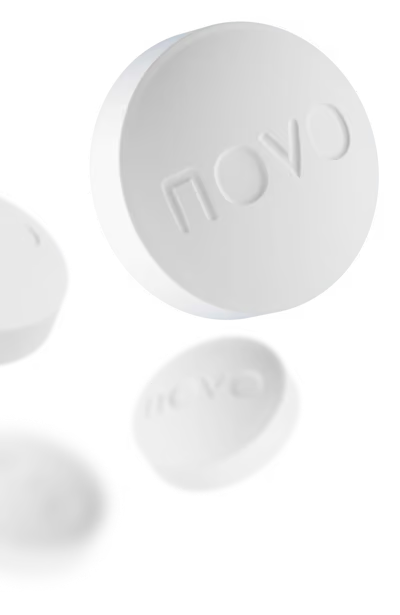
Wegovy Pill UK: Approval, Eligibility, Dosing and Safety

The Wegovy pill has arrived. On 11 June 2026 the MHRA approved oral semaglutide, the first oral GLP-1 medicine licensed in the UK for weight loss, giving people a needle-free alternative to the weekly Wegovy injection. This guide explains what the Wegovy pill is, who can take it, the dosing schedule and how to take it correctly, its side effects and safety guidance, and how it compares with the injection and other licensed oral options.
Summary: Yes, the Wegovy pill (oral semaglutide) is now licensed in the UK: the MHRA approved it on 11 June 2026 as the first oral GLP-1 medicine licensed for weight loss, and since early July 2026 it has been one option a prescriber at Bolt Pharmacy may consider where clinically appropriate.
- The Wegovy pill contains the same medicine as the Wegovy injection (semaglutide), taken as a once-daily 25 mg tablet instead of a weekly injection.
- It is licensed for adults with a BMI of 30 or above, or 27 to 30 with a weight-related health condition, alongside diet and physical activity.
- The dose is stepped up from 1.5 mg to 4 mg, 9 mg, and 25 mg, with at least one month at each level; the tablet is taken on an empty stomach after fasting 8 hours, with a 30-minute wait before eating.
- In the OASIS 4 trial, people lost on average about 16.6% of body weight over 64 weeks when taken as intended, broadly comparable to high-dose injectable semaglutide.
- It is not the same as Rybelsus, which is lower-dose oral semaglutide licensed only for type 2 diabetes.
- Availability is via private prescription at launch; NHS access depends on a NICE appraisal and is not expected in 2026.
| Feature | Wegovy pill (oral semaglutide 25 mg) | Wegovy injection (semaglutide 2.4 mg) | Rybelsus (oral semaglutide) | Orlistat | Mysimba (naltrexone/bupropion) |
|---|---|---|---|---|---|
| Form & route | Oral tablet, once daily | Subcutaneous injection, pre-filled pen | Oral tablet, once daily | Oral capsule | Oral prolonged-release tablet |
| Licensed indication (UK) | Weight management (BMI 30+, or 27–30 with a comorbidity) | Weight management in obesity | Type 2 diabetes only; not licensed for weight loss | Weight management (BMI ≥30, or ≥28 with risk factors) | Weight management (BMI ≥30, or ≥27 with comorbidities) |
| Available doses | 1.5 mg, 4 mg, 9 mg, 25 mg (escalating); maintenance 25 mg daily | 0.25 mg–2.4 mg (escalating); maintenance 2.4 mg weekly | 3 mg, 7 mg, 14 mg daily | 120 mg three times daily (Rx); 60 mg OTC (Alli) | 8 mg/90 mg; titrated to two tablets twice daily |
| Mechanism | GLP-1 receptor agonist; taken on an empty stomach with a SNAC absorption enhancer | GLP-1 receptor agonist; reduces appetite and slows gastric emptying | GLP-1 receptor agonist with SNAC absorption enhancer | Pancreatic lipase inhibitor; reduces dietary fat absorption ~30% | Acts on brain appetite and reward pathways |
| Headline efficacy | ~16.6% body weight loss over 64 weeks when taken as intended (OASIS 4) | ~15% body weight loss over 68 weeks (STEP 1 trial, NEJM) | Modest weight loss; secondary benefit only | Continue only if ≥5% weight loss achieved at 3 months | Modest weight loss; NICE (TA494) did not recommend for NHS use |
| Key warnings | GI effects, pancreatitis, gallstones, thyroid C-cell (animal data); avoid in pregnancy | Pancreatitis, gallstones, thyroid C-cell tumours (animal data), avoid in pregnancy | Not licensed for obesity; not interchangeable with the Wegovy pill | Oily stools, faecal urgency; reduce dietary fat intake | Contraindicated in seizure history, uncontrolled hypertension, opioid use |
| NHS availability | Not yet on NHS; private prescription at launch, NICE appraisal pending | Available via NICE TA875; specialist tier 3/4 services, phased rollout | Available on NHS for type 2 diabetes | Available on NHS; also OTC as Alli | Not routinely commissioned by NHS (NICE TA494); private prescription only |
Table of Contents
Is the Wegovy Pill Available in the UK?
Yes. The MHRA approved the Wegovy pill (oral semaglutide) on 11 June 2026, the first oral GLP-1 licensed in the UK for weight loss. Since early July 2026 it has been one option a prescriber at Bolt Pharmacy may consider where clinically appropriate, and it is not yet on the NHS.
Yes. On 11 June 2026 the Medicines and Healthcare products Regulatory Agency (MHRA) approved oral semaglutide, widely known as the Wegovy pill, for weight management. It is the first oral GLP-1 medicine licensed in the UK for weight loss, giving people a needle-free alternative to the weekly Wegovy injection.
The Wegovy pill contains the same active medicine as the injection, semaglutide, a glucagon-like peptide-1 (GLP-1) receptor agonist that reduces appetite and slows how quickly the stomach empties. The difference is the format: a once-daily tablet taken up to a 25 mg maintenance dose, rather than a once-weekly injection. Semaglutide is a peptide that is normally broken down in the gut, so the tablet uses an absorption enhancer and a specific empty-stomach routine (covered below) to get enough medicine into the body.
The Wegovy pill is not the same as Rybelsus. Rybelsus is also oral semaglutide, but it is licensed at lower doses (3 mg, 7 mg, and 14 mg) for type 2 diabetes, not for weight loss. The Wegovy pill is a higher-dose (25 mg) oral semaglutide licensed specifically for weight management.
Availability: approval is the first step, and the rollout is phased. Since early July 2026 it has been one option a prescriber at Bolt Pharmacy may consider following an online consultation, where clinically appropriate. The pill is not yet available on the NHS: NHS access depends on a separate NICE technology appraisal, which is not expected to conclude in 2026. A regulated online pharmacy or clinic can assess your suitability and or you can check your eligibility with Bolt Pharmacy as the wegovy pill is available since early June 2026.
Because interest is high, be cautious of any product sold online as a "Wegovy pill" without a prescription. Only use a licensed product prescribed by a GMC-registered prescriber and dispensed by a GPhC-registered pharmacy.
Who Can Take the Wegovy Pill?
It is licensed for adults with a BMI of 30 or above, or 27 to 30 with at least one weight-related health condition, alongside diet and physical activity. People on the 2.4 mg weekly injection can switch directly to the 25 mg tablet.
The Wegovy pill is licensed for adults, alongside a reduced-calorie diet and increased physical activity, who have:
-
A BMI of 30 kg/m² or above (obesity), or
-
A BMI between 27 and 30 kg/m² (overweight) with at least one weight-related health condition, such as type 2 diabetes, high blood pressure, high cholesterol, obstructive sleep apnoea, or cardiovascular disease
This eligibility is confirmed at a clinical assessment before any prescription is issued.
Switching from the injection: people who are already being treated privately with the 2.4 mg once-weekly semaglutide injection can be transitioned directly to the 25 mg once-daily tablet, on the advice of their prescriber.
NHS versus private: at launch, access is expected to be through private prescription only. As with the Wegovy injection (recommended on the NHS under NICE guidance TA875 for people with a higher BMI and a weight-related comorbidity through specialist services), NHS access to the pill will be decided by a NICE appraisal and is not expected in 2026.
Who should take extra care: the pill is not suitable during pregnancy, and women who are planning a pregnancy should stop treatment at least two months beforehand. Caution is also advised for anyone with a personal or family history of medullary thyroid carcinoma (MTC) or multiple endocrine neoplasia syndrome type 2 (MEN2). Your prescriber will review your full medical history to confirm the pill is right for you.
How to Take the Wegovy Pill and What to Expect
The dose is stepped up from 1.5 mg to 4, 9, and 25 mg over several months. Take it whole on an empty stomach after fasting at least 8 hours, with a sip of water, then wait 30 minutes before eating.
The dose is increased gradually to reduce gastrointestinal side effects, a process known as dose escalation. The starting dose is 1.5 mg once daily, escalating to 4 mg, then 9 mg, and finally the 25 mg maintenance dose, with a minimum of one month at each dose level.
The empty-stomach rule matters. For the tablet to absorb properly it must be taken:
-
First thing, on an empty stomach, after fasting for at least 8 hours (usually overnight)
-
Whole, with only a sip of plain water (do not split, crush, or chew it)
-
Followed by a wait of at least 30 minutes before eating, drinking anything else, or taking other medicines
This daily routine is the main trade-off compared with the once-weekly injection, which has no food-timing rules. If your mornings are rushed, it is worth thinking honestly about whether a daily tablet or a weekly jab fits your life better.
How well it works: in the phase 3 OASIS 4 trial, adults taking the 25 mg pill for around 64 weeks lost on average about 16.6% of their body weight when they took it as intended (about 13.6% across everyone regardless of how consistently they took it), compared with roughly 2% on placebo. Around one in three of those who took it consistently lost 20% or more of their body weight. These results are broadly comparable to high-dose injectable semaglutide. Individual results vary and depend on your starting weight, the dose you reach, and the lifestyle changes alongside it.
The Wegovy pill works best as part of a comprehensive programme that includes dietary changes and increased physical activity, with regular follow-up to monitor progress and manage side effects.
Family planning: the pill must not be used during pregnancy. Women of childbearing potential should use effective contraception during treatment and stop at least two months before trying to conceive, as the medicine can remain in the body for some time after the last dose.[3]
Wegovy Pill Side Effects and MHRA Safety Guidance
The most common side effects are gastrointestinal, such as nausea, and are worst during dose escalation. Serious but less common risks include pancreatitis, gallbladder problems, and dehydration.
Like all GLP-1 medicines, the most common side effects of the Wegovy pill are gastrointestinal and are usually most noticeable while the dose is being increased. They include:
-
Nausea
-
Vomiting
-
Diarrhoea or constipation
-
Abdominal discomfort or bloating
-
Burping or acid reflux
These effects tend to ease as the body adjusts. Eating smaller, plainer meals, avoiding high-fat or spicy foods, and staying well hydrated can help.
Important safety information, in line with the UK SmPC and MHRA guidance:
-
Pancreatitis: semaglutide has been associated with a small increased risk of pancreatitis. Seek urgent medical attention for severe, persistent abdominal pain that may spread to the back.
-
Gallbladder problems: gallstones and gallbladder inflammation have been reported, particularly with rapid weight loss. Report new upper-abdominal pain or jaundice promptly.
-
Dehydration and kidney injury: severe vomiting or diarrhoea can cause dehydration. Maintain fluid intake and seek advice if you notice reduced urine output or dizziness, as acute kidney injury has been reported.
-
Diabetic retinopathy: rapid improvement in blood glucose, particularly in people with type 2 diabetes on insulin, may temporarily worsen diabetic retinopathy. Those affected should be monitored.
-
Hypoglycaemia: used alongside insulin or a sulfonylurea in type 2 diabetes, there is an increased risk of low blood sugar; the dose of those medicines may need adjusting.
-
Heart rate: a small increase in resting heart rate has been observed and should be monitored.
-
Thyroid C-cell tumours: based on animal studies there is a theoretical risk; this has not been confirmed in humans, but report any neck lump, difficulty swallowing, or persistent hoarseness.
When to seek help:
-
Call 999 for signs of a severe allergic reaction (anaphylaxis), such as difficulty breathing or severe swelling of the face or throat.
-
Contact your GP or call 111 for persistent vomiting, signs of dehydration, a neck lump, or other concerning but non-emergency symptoms.
Report any suspected side effects through the MHRA Yellow Card scheme at yellowcard.mhra.gov.uk. Reports can be submitted by patients, carers, or healthcare professionals.
Wegovy Pill vs the Injection and Other Oral Options
The pill and injection use the same medicine with broadly comparable weight loss, so the choice is about lifestyle: a daily tablet with a morning routine, or a weekly jab. Rybelsus, orlistat, and Mysimba are other oral options.
Now that both formats are licensed in the UK, the choice between the Wegovy pill and the Wegovy injection comes down to lifestyle rather than effectiveness, as trials show broadly comparable weight loss.
-
Wegovy pill (oral semaglutide 25 mg): a once-daily tablet, needle-free, but with a strict empty-stomach routine each morning.
-
Wegovy injection (semaglutide 2.4 mg): a once-weekly injection with a pre-filled pen, no food-timing rules, given on the same day each week.
The pill suits people who dislike needles or prefer a tablet and can keep to the morning routine; the injection suits people who would rather think about treatment once a week.
Other licensed oral options remain available for people who are not suitable for, or do not want, semaglutide:
-
Rybelsus (oral semaglutide, 3/7/14 mg): licensed for type 2 diabetes, not weight loss, though it produces modest weight loss as a secondary benefit. It is not a substitute for the Wegovy pill.
-
Orlistat (Xenical; Alli over the counter): reduces dietary fat absorption by about 30%; licensed for a BMI of 30 kg/m² or above (or 28 with risk factors). Continue beyond three months only if at least 5% of body weight is lost.
-
Mysimba (naltrexone/bupropion): acts on appetite and reward pathways; licensed for a BMI of 30 kg/m² or above (or 27 with comorbidities). NICE (TA494) did not recommend it for routine NHS use, so it is generally private-prescription only.
Oral tirzepatide and other newer agents are still in development and are not yet licensed in the UK for weight management. As always, speak to a GP or pharmacist before starting any weight-management medicine, and avoid buying unlicensed products online.
Scientific References
- MHRA approves semaglutide oral tablets for weight loss.
- OASIS 4: Significant Weight Loss With Oral Semaglutide Comparable With High-Dose Subcutaneous Versions.
- Semaglutide for managing overweight and obesity (TA875).
- Development and evaluation of SNAC-based erodible tablets for gastric delivery of a GLP-1 peptide.
Frequently Asked Questions
Is there a Wegovy pill available in the UK?
Yes. The MHRA approved oral semaglutide, the Wegovy pill, on 11 June 2026 as the first oral GLP-1 medicine licensed in the UK for weight loss. It is a once-daily 25 mg tablet that a prescriber at Bolt Pharmacy may consider where clinically appropriate, and it is not yet available on the NHS.
How is the Wegovy pill different from Rybelsus?
Both are oral semaglutide, but the Wegovy pill is a higher-dose (25 mg) tablet licensed for weight management, while Rybelsus is licensed at lower doses (3, 7, and 14 mg) for type 2 diabetes only. They are not interchangeable.
How do you take the Wegovy pill?
The Wegovy pill is taken once daily, starting at 1.5 mg and increasing to 4 mg, 9 mg, and 25 mg with at least a month at each step. It must be swallowed whole on an empty stomach after fasting for at least 8 hours, with a sip of water, and you should wait at least 30 minutes before eating, drinking, or taking other medicines.
Can I get the Wegovy pill on the NHS?
Not yet. At launch the Wegovy pill is available through private prescription. NHS access depends on a separate NICE technology appraisal, which is not expected to conclude in 2026.
The health-related content published on this site is based on credible scientific sources and is periodically reviewed to ensure accuracy and relevance. Although we aim to reflect the most current medical knowledge, the material is meant for general education and awareness only.
The information on this site is not a substitute for professional medical advice. For any health concerns, please speak with a qualified medical professional. By using this information, you acknowledge responsibility for any decisions made and understand we are not liable for any consequences that may result.
Any third-party brands or services referenced on this site are included for informational purposes only; we are entirely independent and have no affiliation, partnership, or collaboration with any companies mentioned.