




Wegovy Cost UK: NHS Eligibility and Private Prescription Expenses

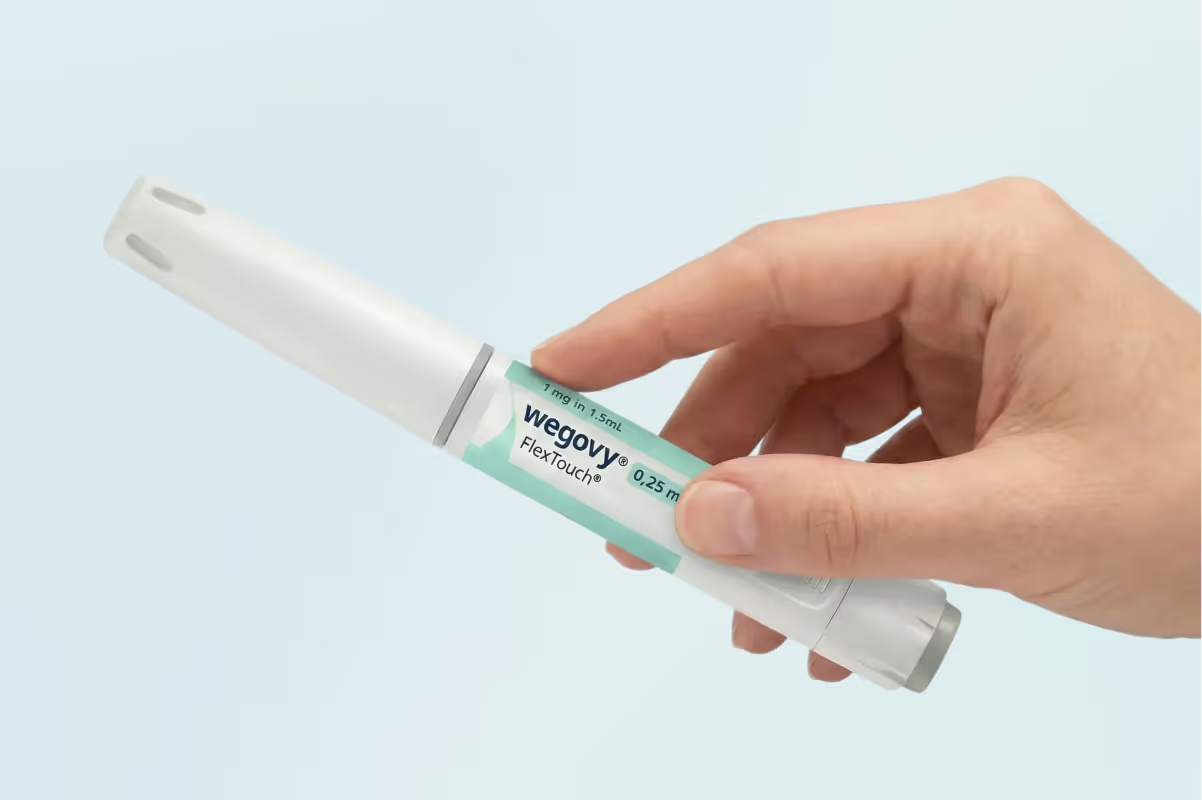
Wegovy (semaglutide 2.4 mg) is a once-weekly injection licensed for chronic weight management in adults with obesity or overweight with comorbidities. Whilst NICE recommends Wegovy for eligible patients, NHS access remains highly restricted due to cost and limited specialist services. Private treatment offers an alternative but represents a substantial financial commitment, typically costing £2,400–£3,600 annually for medication alone. Understanding eligibility criteria, full cost structures, and strategies to reduce expenses is essential for patients considering this GLP-1 receptor agonist therapy. This article examines NHS availability, private costs, and practical approaches to managing Wegovy treatment expenses.
Summary: Wegovy costs £199–£299 monthly (£2,400–£3,600 annually) privately in the UK, with NHS access highly restricted to specialist services for eligible patients with BMI ≥35 kg/m² and weight-related comorbidities.
- Wegovy is a GLP-1 receptor agonist administered as a once-weekly subcutaneous injection for chronic weight management.
- NHS prescribing requires BMI ≥35 kg/m² with comorbidities, specialist service referral, and demonstration of ≥5% weight loss at 6 months to continue beyond initial treatment.
- Private treatment costs include medication (£199–£299 monthly), initial consultations, and regular follow-up appointments (£30–£100 each).
- Common adverse effects include nausea, diarrhoea, and vomiting; rare but serious risks include pancreatitis and gallbladder disease requiring prompt medical attention.
- Treatment should be part of comprehensive lifestyle modification including dietary changes and increased physical activity, with regular review of treatment necessity and stopping criteria.
Table of Contents
What Is Wegovy and How Does It Work?
Wegovy (semaglutide 2.4 mg) is a once-weekly subcutaneous injection licensed by the Medicines and Healthcare products Regulatory Authority (MHRA) for chronic weight management in adults with obesity (BMI ≥30 kg/m²) or overweight (BMI ≥27 kg/m²) with at least one weight-related comorbidity. It belongs to a class of medicines called glucagon-like peptide-1 (GLP-1) receptor agonists, originally developed for type 2 diabetes management but now widely recognised for their weight loss efficacy.[1][2]
The mechanism of action centres on mimicking the naturally occurring hormone GLP-1, which is released from the gut after eating. Semaglutide binds to GLP-1 receptors in the brain, particularly in areas that regulate appetite and food intake. This leads to reduced hunger, increased feelings of fullness, and delayed gastric emptying, helping patients consume fewer calories without the intense cravings often associated with calorie restriction. The STEP clinical trials demonstrated average weight loss of 10–15% of body weight over 68 weeks when combined with lifestyle interventions, though individual results vary.[19][20]
Wegovy is administered via a pre-filled injection pen, with doses gradually increased over 16 weeks to minimise gastrointestinal side effects. Some patients may remain on the 1.7 mg dose if the maximum dose is not tolerated. Common adverse effects include nausea, diarrhoea, vomiting, constipation, and abdominal pain, which typically improve as the body adjusts to treatment. More serious but rare risks include pancreatitis and gallbladder disease. Patients should be counselled on recognising symptoms such as severe, persistent abdominal pain and advised to seek medical attention promptly.
Wegovy requires careful consideration in certain patients. Those with a personal or family history of medullary thyroid carcinoma or multiple endocrine neoplasia syndrome type 2 should discuss risks with their doctor and be counselled about symptoms such as neck masses, hoarseness, or difficulty swallowing. Wegovy should not be used during pregnancy and should be discontinued at least 2 months before a planned pregnancy. It is also not recommended during breastfeeding.
Additional cautions include: risk of dehydration and acute kidney injury, diabetic retinopathy in people with diabetes, potential increased heart rate, and hypoglycaemia risk when used with insulin or sulfonylureas.[1][2] The delayed gastric emptying may affect absorption of other oral medicines and increase aspiration risk during procedures requiring anaesthesia.[1][2]
Wegovy should be used as part of a comprehensive weight management programme including dietary modification and increased physical activity. Suspected side effects should be reported via the MHRA Yellow Card scheme.
| Cost Component | Estimated Cost | Frequency | Notes |
|---|---|---|---|
| Wegovy medication (private) | £199–£299 per month | Monthly | Approx. £2,400–£3,600 annually; prices vary by provider and dose |
| Baseline blood tests | £100–£300 | One-off (may repeat) | Includes HbA1c, renal and liver function where clinically indicated |
| Dietitian or nutritional support | £50–£100 per session | As needed | Can improve outcomes and overall cost-effectiveness of treatment |
| Sharps disposal containers | £10–£20 | Annually | Required for safe disposal of used injection pens |
| NHS-funded Wegovy | Free at point of use | Up to 2 years | Restricted to specialist services; BMI ≥35 kg/m² with comorbidity per NICE TA875 |
NHS Wegovy Availability and Prescription Criteria
Access to Wegovy on the NHS is highly restricted due to cost considerations and limited supply. The National Institute for Health and Care Excellence (NICE) published guidance (TA875) in March 2023 recommending semaglutide 2.4 mg for weight management, but with strict eligibility criteria and only through specialist weight management services.
NICE eligibility criteria for NHS-funded Wegovy include:
-
Adults with at least one weight-related comorbidity (such as hypertension, type 2 diabetes, obstructive sleep apnoea, or cardiovascular disease) and a BMI of 35 kg/m² or above
-
Adults with at least one weight-related comorbidity and a BMI of 30.0–34.9 kg/m² may be considered in specialist services
-
Lower BMI thresholds (typically 2.5 kg/m² lower) apply for people from some minority ethnic groups
-
Participation in a specialist weight management service (Tier 3 or 4)
-
Commitment to dietary and lifestyle interventions
NICE recommends that treatment should only continue beyond 6 months if patients achieve at least 5% weight loss during the initial treatment period. Additionally, NHS treatment is capped at a maximum of 2 years. These criteria ensure that NHS resources are directed toward those most likely to benefit from therapy.
In practice, NHS availability remains limited. Many integrated care boards (ICBs) are still developing commissioning arrangements for specialist weight management services capable of prescribing Wegovy, and existing services often have substantial waiting lists. Supply chain constraints have also affected availability.
Patients seeking NHS treatment should discuss their eligibility with their GP, who can refer to local specialist services where available. Wegovy must be initiated within specialist weight management services, though ongoing prescribing may be transferred to primary care in some areas through local shared-care arrangements once treatment is established and stable.
Private Wegovy Costs in the UK
For patients unable to access Wegovy through the NHS or unwilling to wait for specialist referral, private treatment is available but represents a significant financial commitment. Understanding the full cost structure is essential before embarking on treatment.
Medication costs form the largest component of private Wegovy treatment. A single month's supply typically costs £199–£299, depending on the pharmacy or online prescribing service and the dose prescribed. Given that treatment is generally recommended for at least 12 months (and often longer for weight maintenance), patients should budget £2,400–£3,600 annually for medication alone. Some providers offer subscription models with slight discounts for longer commitments, but these still represent substantial ongoing expenditure. Prices may vary over time, so it's advisable to check current costs.
Consultation add to the overall cost. Initial consultations with private prescribers (whether in-person or via telehealth platforms) typically range from £50–£150. Follow-up consultations, required at regular intervals to monitor progress and side effects, cost £30–£100 per appointment. Most services require monthly or quarterly reviews, adding £360–£1,200 annually to treatment costs.
Additional expenses may include:
-
Baseline investigations (clinically indicated blood tests such as HbA1c, renal and liver function): £100–£300
-
Sharps disposal containers for used injection pens: £10–£20 annually
-
Nutritional support or dietitian consultations: £50–£100 per session
Some private health insurance policies may cover Wegovy if prescribed for specific medical indications, but most insurers exclude weight management treatments or classify them as cosmetic. Patients should verify coverage directly with their insurer before assuming reimbursement.
Online prescribing services have proliferated, offering convenient access but varying significantly in clinical governance standards. Patients should ensure any provider is registered with the appropriate regulator (Care Quality Commission in England, Healthcare Improvement Scotland, Healthcare Inspectorate Wales, or Regulation and Quality Improvement Authority in Northern Ireland) and employs GMC-registered prescribers who conduct thorough medical assessments before prescribing.
Ways to Reduce Wegovy Treatment Expenses
Given the substantial cost of Wegovy, patients may explore several strategies to reduce financial burden whilst maintaining safe, effective treatment.
Comparing private providers can yield significant savings. Prices vary considerably between online prescribing services, traditional pharmacies, and private clinics. Patients should obtain quotes from multiple sources, ensuring they compare like-for-like services including consultation frequency and clinical support. Some telehealth platforms offer subscription models with modest discounts for 3–6 month commitments, though patients should verify cancellation policies and ensure they're not locked into contracts if treatment proves unsuitable.
Exploring patient assistance programmes may provide relief for some individuals. Currently, Novo Nordisk (Wegovy's manufacturer) does not offer a formal patient assistance scheme in the UK comparable to those in other countries, but it's worth monitoring their website for any future initiatives. Some private providers occasionally offer promotional pricing for new patients, though these should be approached cautiously to ensure clinical standards aren't compromised.
Considering alternative GLP-1 medications is not recommended. Whilst Ozempic (semaglutide for diabetes) contains the same active ingredient at lower doses, NHS England and the Department of Health and Social Care have explicitly advised against prescribing diabetes medications off-label for weight loss due to supply constraints that affect patients with diabetes.[18] Patients should never purchase medications from unlicensed sources or overseas suppliers, as these may be counterfeit, improperly stored, or lack appropriate clinical oversight.
Maximising treatment effectiveness through comprehensive lifestyle modification can potentially shorten treatment duration and reduce overall costs. Patients who fully engage with dietary changes, increase physical activity, and address behavioural factors are more likely to achieve and maintain weight loss. Working with registered dietitians or weight management specialists (costs noted earlier) may seem an additional expense but can improve outcomes and cost-effectiveness.
Finally, patients should regularly review treatment necessity with their prescriber. NICE guidance recommends discontinuation if less than 5% weight loss occurs at 6 months, and treatment should not exceed 2 years (NHS criteria). These principles can also guide private treatment decisions. Open discussions about treatment goals, realistic expectations, and stopping criteria ensure that financial resources are used appropriately whilst prioritising patient safety and wellbeing. If weight loss plateaus or side effects become problematic, continuing expensive medication may not be justified.
Scientific References
- Wegovy 0.25 mg, FlexTouch solution for injection in pre-filled pen – Summary of Product Characteristics.
- Wegovy 2.4 mg, FlexTouch solution for injection in pre-filled pen – Summary of Product Characteristics.
- Wegovy EPAR – Product Information.
- Wegovy EPAR – Public Assessment Report.
- Summary of Risk Management Plan for Wegovy (semaglutide sc 2.4 mg).
- Wegovy – European Medicines Agency medicine overview.
- Medicines regulator approves up to 7.2 mg dose of semaglutide (Wegovy) for patients with obesity only.
- MHRA approves GLP-1 receptor agonist semaglutide to reduce risk of serious heart problems in obese or overweight adults.
- GLP-1 receptor agonists: reminder of the potential side effects and to be aware of the potential for misuse.
- GLP-1 and dual GIP/GLP-1 receptor agonists: potential risk of pulmonary aspiration during general anaesthesia or deep sedation.
- Semaglutide for managing overweight and obesity. Technology Appraisal Guidance TA875.
- Semaglutide for managing overweight and obesity – TA875, Chapter 1: Recommendations.
- Semaglutide for managing overweight and obesity – TA875, Chapter 2: Information about semaglutide.
- Resource impact report: Semaglutide for managing overweight and obesity (TA875).
- Semaglutide for managing overweight and obesity – GID-TA10765: BMI thresholds for minority ethnic groups.
- Semaglutide – British National Formulary (BNF).
- Obesity – Treatment. NHS.uk.
- GLP-1 medicines for weight loss and diabetes: what you need to know.
- Wilding JPH et al. Once-Weekly Semaglutide in Adults with Overweight or Obesity (STEP 1). N Engl J Med. 2021.
- Wadden TA et al. Effect of Continued Weekly Subcutaneous Semaglutide vs Placebo on Weight Loss Maintenance (STEP 4). JAMA. 2021.
- Rubino DM et al. Semaglutide 2·4 mg once a week in adults with overweight or obesity (STEP 4). Lancet. 2021.
- Garvey WT et al. Two-year effects of semaglutide in adults with overweight or obesity (STEP 5). 2022.
- Rybelsus 3 mg Tablet – Summary of Product Characteristics (SmPC).
- Patel S et al. Semaglutide, delayed gastric emptying, and intraoperative pulmonary aspiration: a case report. 2023.
- Kyinsu (insulin icodec/semaglutide) EPAR – Product Information.
Frequently Asked Questions
Can I get Wegovy on the NHS?
NHS Wegovy is available only through specialist weight management services for adults with BMI ≥35 kg/m² and at least one weight-related comorbidity, subject to local commissioning arrangements. Access remains highly restricted due to cost and limited service capacity, with many areas maintaining substantial waiting lists.
How much does Wegovy cost privately in the UK?
Private Wegovy costs £199–£299 per month for medication, totalling £2,400–£3,600 annually. Additional costs include initial consultations, regular follow-up appointments (£30–£100 each), and baseline investigations (£100–£300), making total annual expenditure approximately £3,000–£5,000.
What happens if I stop taking Wegovy?
Weight regain commonly occurs after stopping Wegovy, as the medication's appetite-suppressing effects cease. NICE recommends treatment for a maximum of 2 years on the NHS, with ongoing lifestyle modification essential for maintaining weight loss after discontinuation.
The health-related content published on this site is based on credible scientific sources and is periodically reviewed to ensure accuracy and relevance. Although we aim to reflect the most current medical knowledge, the material is meant for general education and awareness only.
The information on this site is not a substitute for professional medical advice. For any health concerns, please speak with a qualified medical professional. By using this information, you acknowledge responsibility for any decisions made and understand we are not liable for any consequences that may result.
Any third-party brands or services referenced on this site are included for informational purposes only; we are entirely independent and have no affiliation, partnership, or collaboration with any companies mentioned.







