


Retatrutide Weight Loss Cost: UK Pricing, Availability and Safe Alternatives

Retatrutide weight loss cost is a growing search topic as interest in this investigational triple-receptor agonist continues to rise. Developed by Eli Lilly, retatrutide simultaneously targets GLP-1, GIP, and glucagon receptors, setting it apart from existing licensed treatments such as semaglutide and tirzepatide. However, retatrutide has not yet received marketing authorisation from the MHRA or EMA, meaning it is not currently available as a licensed medicine in the UK. This article explains what retatrutide is, why no regulated UK price exists, and what patients should know about safe, evidence-based weight management options available right now.
Summary: Retatrutide has no regulated cost in the UK because it remains an unlicensed investigational medicine that has not yet received MHRA or EMA marketing authorisation.
- Retatrutide is a triple agonist targeting GLP-1, GIP, and glucagon receptors — a novel mechanism not shared by any currently licensed UK weight management medicine.
- Phase 2 trial data (NEJM, 2023) showed mean body weight reductions at higher doses over 48 weeks, but Phase 3 confirmation and long-term safety data are still pending.
- No licensed supply chain exists for retatrutide in the UK; products sold online as 'research peptides' or compounded retatrutide are not subject to MHRA quality controls.
- If approved, retatrutide pricing would require NICE technology appraisal and NHS England negotiation before any funded access could begin.
- Patients should only obtain weight management medicines from GPhC-registered pharmacies with a valid prescription from a GMC-registered clinician.
- Suspected side effects from any weight management medicine can be reported to the MHRA via the Yellow Card Scheme at yellowcard.mhra.gov.uk.
Table of Contents
- What Is Retatrutide and How Does It Support Weight Loss?
- How Much Does Retatrutide Cost in the UK?
- Factors That Affect the Price of Weight Loss Treatments
- NHS Coverage vs Private Prescribing for Obesity Medicines
- Talking to Your GP or Specialist About Weight Management Options
- Scientific References
- Frequently Asked Questions
What Is Retatrutide and How Does It Support Weight Loss?
Retatrutide is an investigational triple agonist (GLP-1, GIP, and glucagon receptors) not yet licensed by the MHRA or EMA, with Phase 2 data suggesting significant weight reduction but Phase 3 confirmation still required.
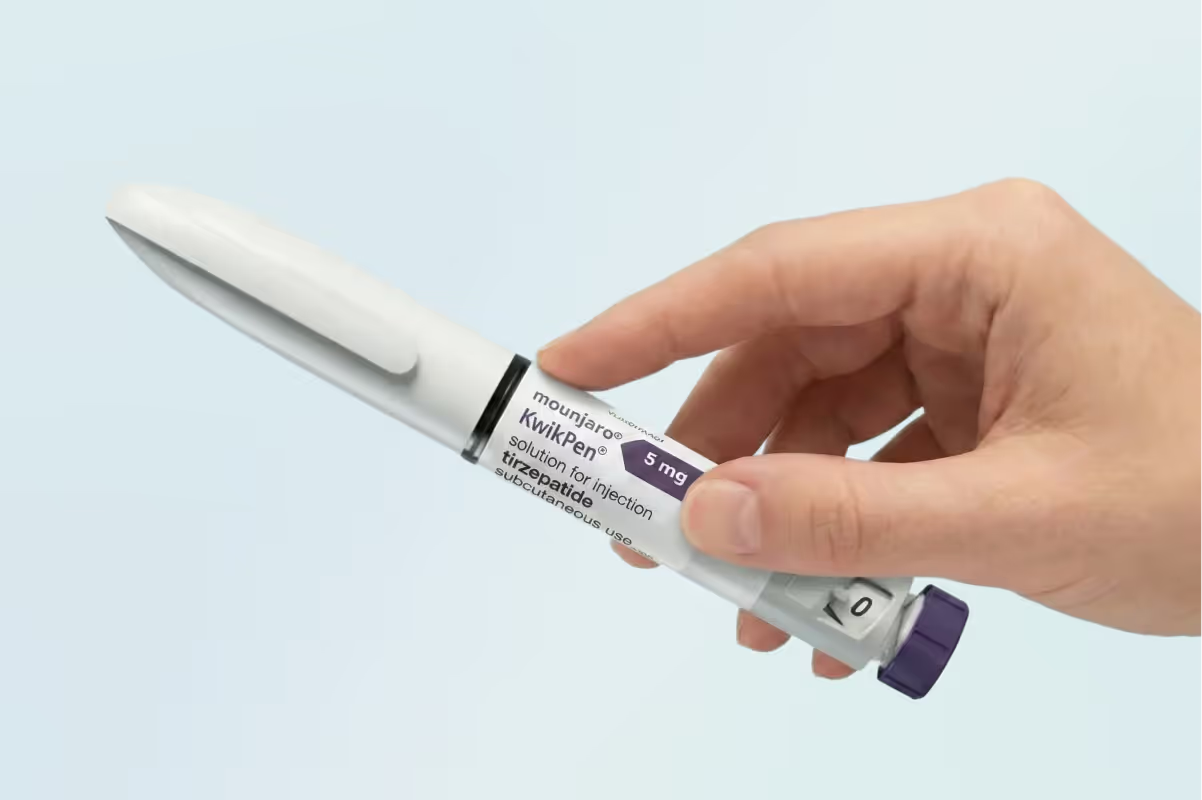
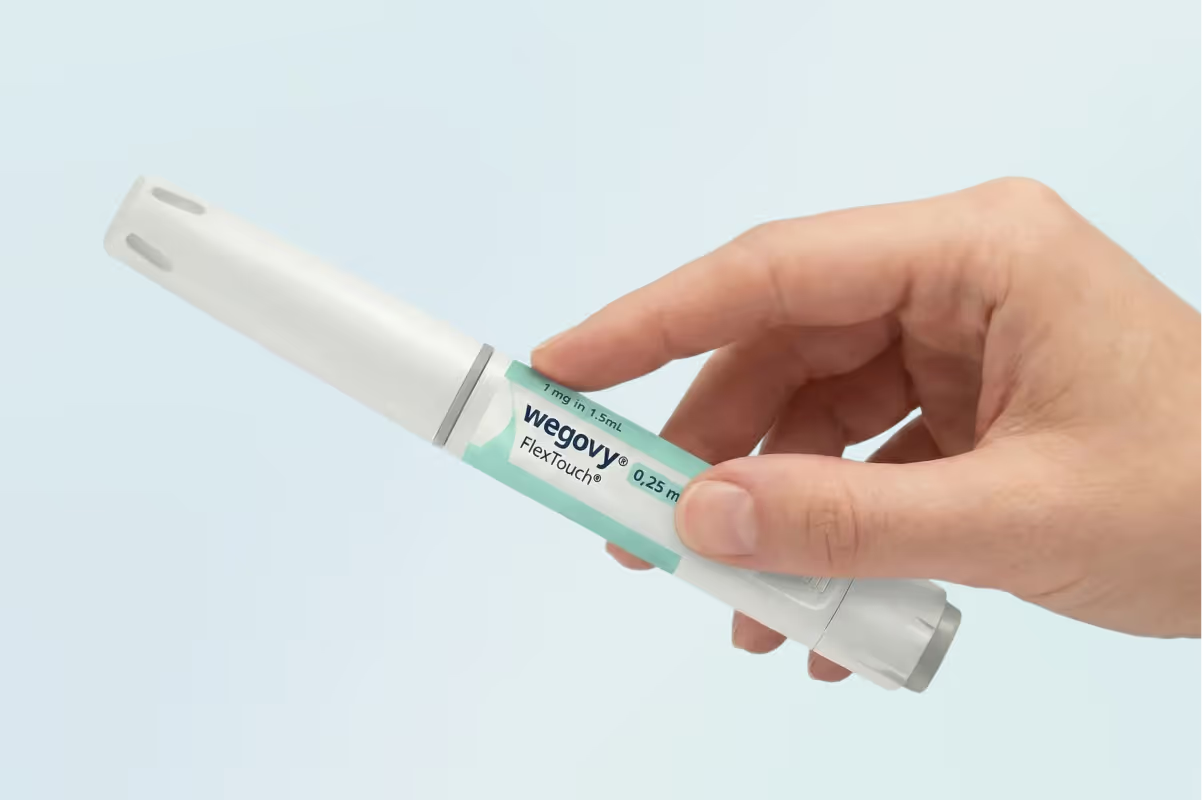
Retatrutide is an investigational injectable medicine currently being evaluated in clinical trials for the treatment of obesity and overweight. It belongs to a novel class of agents known as triple agonists, meaning it simultaneously activates three hormone receptors: glucagon-like peptide-1 (GLP-1), glucose-dependent insulinotropic polypeptide (GIP), and glucagon receptors. This triple mechanism distinguishes it from existing approved treatments such as semaglutide (which targets GLP-1 alone) or tirzepatide (which targets GLP-1 and GIP).[4][6]
In trials, the effects of retatrutide are thought to be mediated through a combination of appetite suppression, increased energy expenditure, and broader metabolic regulation — though the precise contribution of each receptor pathway in humans remains under investigation, and long-term cardiovascular and safety outcomes are not yet established.
A Phase 2 randomised controlled trial published in the New England Journal of Medicine in 2023 (Jastreboff et al., NEJM 2023) reported that participants receiving higher doses of retatrutide (up to 12 mg) achieved mean body weight reductions of approximately 17–24% over 48 weeks. These figures relate to specific dose cohorts with structured titration schedules and should be interpreted in the context of an early-phase trial. If confirmed in larger Phase 3 studies, they would represent some of the most significant weight loss outcomes observed with a pharmacological agent to date. Ongoing Phase 3 trials are registered on ClinicalTrials.gov.
The most commonly reported adverse events in the Phase 2 trial were gastrointestinal in nature, including nausea, vomiting, and diarrhoea — consistent with the GLP-1 receptor agonist class.[1][2] Effects attributable to glucagon receptor activation, such as increases in heart rate, were also observed and are subject to further evaluation in ongoing studies.
It is important to note that retatrutide has not yet received marketing authorisation from the Medicines and Healthcare products Regulatory Agency (MHRA) or the European Medicines Agency (EMA). It is therefore not currently available as a licensed medicine in the UK. Patients should be cautious about any source claiming to supply retatrutide outside of a regulated clinical trial setting, as such products would not have undergone the rigorous safety and quality checks required for licensed medicines.
| Feature | Retatrutide | Semaglutide 2.4 mg (Wegovy) | Tirzepatide (Mounjaro/Zepbound) |
|---|---|---|---|
| Mechanism | Triple agonist: GLP-1, GIP, glucagon receptors | GLP-1 receptor agonist | Dual agonist: GLP-1 and GIP receptors |
| Regulatory status (UK) | Unlicensed; investigational Phase 3 trials ongoing | MHRA-licensed; NICE-approved for obesity (TA875) | MHRA-licensed; NICE-approved for type 2 diabetes; obesity appraisal ongoing |
| NHS availability | Not available; no licensed supply exists | Available via specialist weight management services | Available for type 2 diabetes; obesity commissioning pending NICE guidance |
| Approximate UK private cost per month | No regulated price; unlicensed sources carry significant safety risks | Approx. £200–£300 (indicative, mid-2025; varies by dose and provider) | Consult SmPC; prices vary by dose and provider |
| Efficacy (weight loss) | ~17–24% body weight reduction at 48 weeks (Phase 2, 12 mg cohort; NEJM 2023) | ~15% body weight reduction at 68 weeks (Phase 3 STEP trials) | ~20–22% body weight reduction at 72 weeks (Phase 3 SURMOUNT trials) |
| Common side effects | Nausea, vomiting, diarrhoea; increased heart rate (glucagon effect) | Nausea, vomiting, diarrhoea, constipation | Nausea, vomiting, diarrhoea, constipation |
| Key safety/regulatory warning | Do not obtain outside authorised trials; unlicensed products lack MHRA quality oversight | Supply shortages subject to NHS England and MHRA National Patient Safety Alerts | Consult SmPC; supply pressures noted across GLP-1 class in UK |
How Much Does Retatrutide Cost in the UK?
Retatrutide has no official UK price because it is unlicensed; any online source offering it for sale is supplying an unregulated product that has not met MHRA safety and quality standards.
Because retatrutide does not currently hold a licence for use in the UK, there is no official or regulated price for this medicine within the British healthcare system. It is not available through NHS prescribing, nor is it formally listed by any private pharmacy or specialist clinic as an approved treatment option. Any pricing information circulating online should be treated with considerable caution, as it may relate to unregulated, counterfeit, research-grade, or compounded compounds that have not been approved for human therapeutic use.
For context, licensed GLP-1 receptor agonists used in weight management — such as semaglutide 2.4 mg (Wegovy) — cost in the region of £200–£300 per month when prescribed privately in the UK (indicative figures as of mid-2025; prices vary by dose, provider, and supply conditions). NHS costs differ due to procurement arrangements and are not equivalent to private list prices. If retatrutide were to receive regulatory approval in future, its pricing would likely be subject to negotiation between the manufacturer (Eli Lilly) and NHS England under the Voluntary Scheme for Branded Medicines Pricing, Access and Growth (VPAG, 2024), as well as appraisal by the National Institute for Health and Care Excellence (NICE) to determine cost-effectiveness.[14]
Patients who encounter websites or clinics offering retatrutide for purchase or prescription in the UK at this time should be aware that:
-
No licensed supply chain exists for this medicine in the UK
-
Unlicensed medicines carry significant safety risks, including unknown purity, dosing inaccuracies, and absence of pharmacovigilance oversight
-
Products marketed as 'research peptides' or compounded retatrutide are not subject to MHRA quality controls and should not be used outside of authorised trials
-
The MHRA advises consumers to obtain medicines only from General Pharmaceutical Council (GPhC)-registered pharmacies and with a valid prescription from a regulated prescriber; guidance on buying medicines online and avoiding falsified products is available on the MHRA website
-
Providers of private weight management services should be regulated by the Care Quality Commission (CQC); patients are advised to verify registration before proceeding
Until regulatory approval is granted and NICE guidance is issued, the true cost of retatrutide in the UK remains undetermined.
Factors That Affect the Price of Weight Loss Treatments
Weight management medicine costs in the UK are shaped by regulatory status, mechanism novelty, NHS pricing negotiations under the VPAG scheme, formulation complexity, and supply and demand pressures.
The cost of weight management medicines in the UK is shaped by a range of clinical, commercial, and regulatory factors. Understanding these can help patients make informed decisions when exploring their options, particularly in the private sector where pricing is less standardised.
Key factors influencing cost include:
-
Regulatory status: Licensed medicines that have undergone full MHRA or EMA approval typically command higher prices than older, off-patent alternatives, reflecting the investment in clinical development and post-marketing surveillance.
-
Mechanism of action and novelty: Newer agents with more complex mechanisms — such as dual or triple receptor agonists — tend to be priced at a premium compared with established treatments.
-
Manufacturer pricing and access agreements: Pharmaceutical companies set list prices, which are then subject to negotiation with NHS England through the Voluntary Scheme for Branded Medicines Pricing, Access and Growth (VPAG).[14] This scheme, which replaced the previous VPAS arrangement from January 2024, governs how branded medicine prices and access conditions are agreed between industry and the Department of Health and Social Care.
-
Formulation and administration: Injectable medicines requiring cold-chain storage and specialist administration devices often carry higher costs than oral alternatives.
-
Demand and supply pressures: High demand for GLP-1 medicines has already caused significant supply shortages in the UK, which have been the subject of NHS England and MHRA National Patient Safety Alerts. These pressures can affect both availability and private pricing.
For patients considering private weight management programmes, costs extend beyond the medicine itself. Consultations with a specialist obesity physician or dietitian, monitoring blood tests, and follow-up appointments all contribute to the overall financial commitment. Some private clinics offer bundled packages, whilst others charge per consultation. It is advisable to request a full breakdown of costs before committing to any private treatment pathway, to verify that the prescribing clinician is registered with the General Medical Council (GMC), and to confirm that the pharmacy dispensing any medicine is registered with the GPhC.
NHS Coverage vs Private Prescribing for Obesity Medicines
NHS access to weight management medicines requires NICE approval and eligibility criteria; retatrutide cannot be prescribed on the NHS or legitimately via private prescription as it remains unlicensed and without EAMS designation.
Access to weight management medicines on the NHS is governed by NICE guidance and NHS England commissioning policies. NICE has approved semaglutide 2.4 mg (Wegovy) for use within specialist weight management services (NICE TA875), subject to specific eligibility criteria — including a BMI of 35 kg/m² or above (or 32.5 kg/m² or above in people from certain ethnic minority backgrounds at higher metabolic risk) alongside at least one weight-related comorbidity. People with a BMI of 30.0–34.9 kg/m² may also be eligible where specialist referral criteria are otherwise met, in line with NICE guidance. Wegovy is approved for use on the NHS for a maximum of two years within these specialist services, as part of a comprehensive programme that includes dietary support, physical activity guidance, and behavioural intervention.[11]
Tirzepatide (Mounjaro) has received a positive NICE recommendation in the UK, but this is specifically for the treatment of type 2 diabetes, not for weight management. A separate NICE technology appraisal for tirzepatide in the management of overweight and obesity (under the brand name Zepbound in some markets) is a distinct process; patients and clinicians should refer to the current NICE topic page for the up-to-date appraisal status of tirzepatide for weight management, as this may change over time.
NHS access to weight management services remains limited in practice. Specialist services (sometimes referred to as Tier 3 or Tier 4 services) are not uniformly available across all integrated care boards (ICBs), and waiting times can be lengthy. This has led many patients to seek treatment through private prescribing, where eligibility criteria may differ and access is faster, albeit at personal cost.
For a medicine like retatrutide, NHS coverage is not currently possible given its unlicensed status. Even if it receives regulatory approval, it would need to complete the NICE technology appraisal process before NHS prescribing could begin. NICE appraisal timelines vary depending on the complexity of the evidence and the appraisal route; once a final NICE technology appraisal is published, NHS commissioners are required by statute to fund the recommended treatment within three months. Private prescribing of unlicensed medicines is legally permissible in the UK under specific circumstances — for example, under the MHRA's Early Access to Medicines Scheme (EAMS) or on a named-patient basis — but requires clear clinical justification, informed patient consent, and compliance with MHRA guidance on unlicensed medicines. It would not be appropriate for a medicine still in clinical trials and without EAMS designation.
Patients are encouraged to discuss both NHS and private pathways with their GP, who can advise on local service availability and appropriate referral routes.
Talking to Your GP or Specialist About Weight Management Options
Your GP is the appropriate first contact for weight management, able to assess eligibility for NICE-approved treatments and refer to specialist services; no clinician should prescribe retatrutide outside a formal clinical trial.
If you are considering medical treatment for weight management, your GP is the most appropriate first point of contact. They can assess your overall health, calculate your BMI, review any relevant comorbidities such as type 2 diabetes or hypertension, and determine whether you meet the criteria for referral to a specialist weight management service (Tier 3 or Tier 4). Being open and honest about your weight history, previous attempts at lifestyle modification, and any medicines you are currently taking will help your GP provide the most relevant advice.
When discussing weight loss medicines, it is helpful to ask your GP or specialist about:
-
Currently licensed and NICE-approved options available to you on the NHS or privately
-
Eligibility criteria for specific treatments and what monitoring would be required
-
Realistic expectations regarding weight loss outcomes, timescales, and the importance of lifestyle changes alongside medication
-
Potential side effects, including gastrointestinal symptoms commonly associated with GLP-1 receptor agonists, and how these are managed
If you experience any suspected side effects from a weight management medicine, you can report these directly to the MHRA via the Yellow Card Scheme (available at yellowcard.mhra.gov.uk). Your clinician can also submit a report on your behalf. Reporting suspected adverse reactions helps the MHRA monitor the safety of medicines in real-world use.
Regarding retatrutide specifically, whilst it is reasonable to ask your clinician about emerging treatments, it is important to understand that no licensed or regulated supply exists in the UK at present. A responsible clinician will not prescribe an unlicensed investigational medicine outside of a formal clinical trial or an MHRA-approved access scheme. If you are interested in participating in research, your GP or a specialist centre may be able to advise on relevant ongoing trials.
If you are seeking private treatment, ensure that any clinic you use is regulated by the Care Quality Commission (CQC) and that medicines are dispensed by a GPhC-registered pharmacy. Be cautious of online providers offering unlicensed or 'research' compounds, which carry significant safety risks.
If you are struggling with your weight and feel your concerns are not being addressed, you have the right to ask for a second opinion or a referral to a specialist obesity service. The NHS website provides information on weight management services, and NICE's guideline on obesity (CG189, or its current replacement) and patient decision aids can help you understand your options. Weight management is a long-term journey, and evidence-based, professionally supervised care remains the safest and most effective approach.
Scientific References
- Triple-Hormone-Receptor Agonist Retatrutide for Obesity - A Phase 2 Trial.
- Retatrutide showing promise in obesity (and type 2 diabetes).
- Retatrutide, a GIP, GLP-1 and glucagon receptor agonist, for people with type 2 diabetes: a randomised, double-blind, placebo and active-controlled, parallel-group, phase 2 trial conducted in the USA.
- Novel GLP-1-based Medications for Type 2 Diabetes and Obesity.
- Effect of Incretin-Based Therapies on Blood Pressure: A Systematic Review and Meta-Analysis.
- Clinical Potential of GIP in Type 2 Diabetes and Obesity.
- Tirzepatide in Metabolic Diseases: Clinical Efficacy and Safety Beyond Diabetes and Obesity.
- A Rare Case of Tirzepatide-Associated Immune Thrombocytopenia.
- Retatrutide for the treatment of obesity, obstructive sleep apnea and knee osteoarthritis: Rationale and design of the TRIUMPH registrational clinical trials.
- Retatrutide: a triple incretin receptor agonist for obesity management.
- Semaglutide for managing overweight and obesity (TA875).
- Obesity: identification, assessment and management (CG189).
- Buying medicines online — MHRA guidance on avoiding falsified products.
- Voluntary Scheme for Branded Medicines Pricing, Access and Growth (VPAG).
Frequently Asked Questions
Can I buy retatrutide in the UK for weight loss?
No. Retatrutide is not licensed by the MHRA and cannot be legally purchased or prescribed in the UK outside of an authorised clinical trial. Products sold online as retatrutide are unregulated and carry significant safety risks.
When might retatrutide become available on the NHS?
Retatrutide would first need to complete Phase 3 trials, receive MHRA or EMA marketing authorisation, and then undergo a NICE technology appraisal before NHS prescribing could begin. No confirmed timeline is currently available.
What licensed weight loss injections are currently available in the UK?
Semaglutide 2.4 mg (Wegovy) is currently NICE-approved for use within specialist NHS weight management services under specific eligibility criteria, and is also available privately. Tirzepatide (Mounjaro) is licensed for type 2 diabetes; its NICE appraisal for weight management is a separate ongoing process.
The health-related content published on this site is based on credible scientific sources and is periodically reviewed to ensure accuracy and relevance. Although we aim to reflect the most current medical knowledge, the material is meant for general education and awareness only.
The information on this site is not a substitute for professional medical advice. For any health concerns, please speak with a qualified medical professional. By using this information, you acknowledge responsibility for any decisions made and understand we are not liable for any consequences that may result.
Any third-party brands or services referenced on this site are included for informational purposes only; we are entirely independent and have no affiliation, partnership, or collaboration with any companies mentioned.






