



Mounjaro Cost UK: NHS vs Private Prescription Pricing Guide

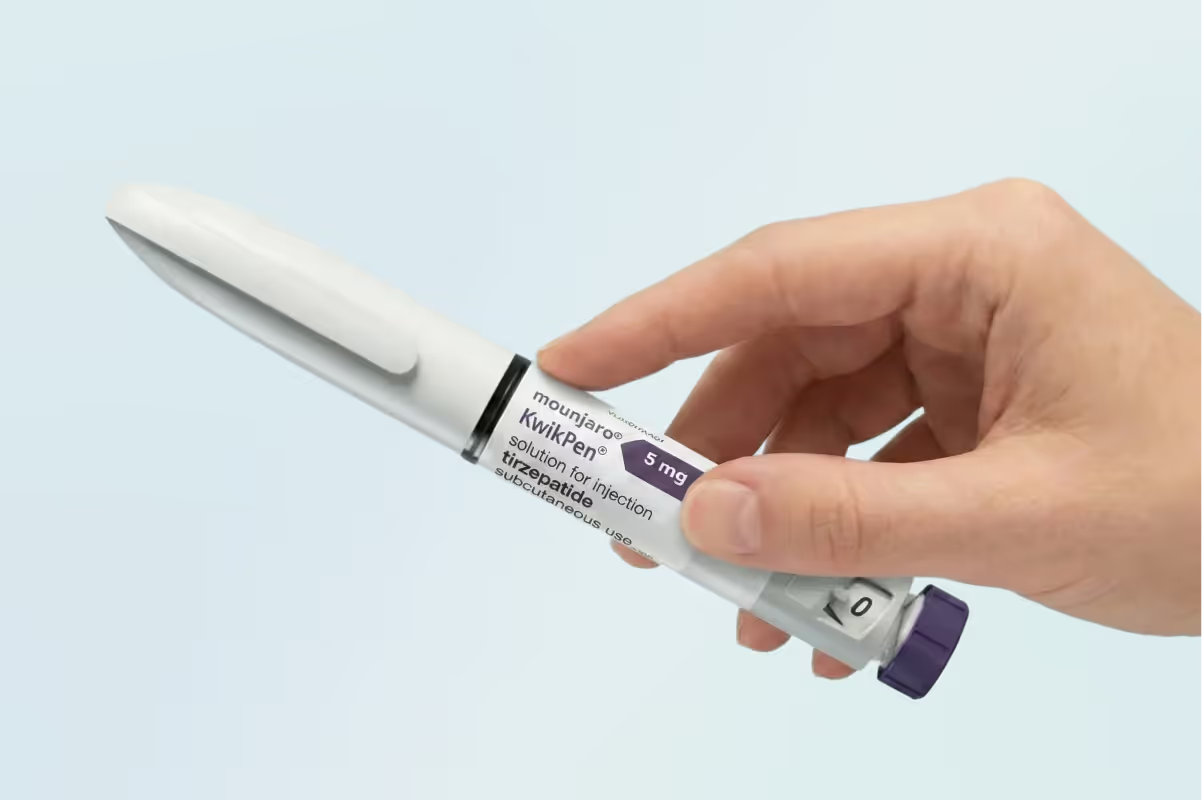
Mounjaro (tirzepatide) is a prescription medicine licensed in the UK for weight management and for treating type 2 diabetes mellitus in adults. As a dual GIP and GLP-1 receptor agonist administered once weekly, it helps regulate blood sugar levels and support weight management. The cost of Mounjaro varies considerably depending on whether you access it through the NHS or via private prescription. Understanding pricing structures, eligibility criteria, and how to access this medication safely through registered UK pharmacies is essential for patients considering tirzepatide treatment. This guide explains Mounjaro costs, NHS versus private options, and factors affecting pricing across different providers.
Summary: Mounjaro costs £9.90 per NHS prescription in England (free in Scotland, Wales, and Northern Ireland), whilst private prescriptions typically range from £149.99–£284.99 (price-comparison listing, checked 17 October 2026) per month depending on dose and provider. Bolt Pharmacy charges £149–£299 per month (boltpharmacy.co.uk, checked 17 October 2026); see current pricing.
- Tirzepatide is a dual GIP/GLP-1 receptor agonist licensed for weight management and type 2 diabetes, administered as a once-weekly subcutaneous injection with doses ranging from 2.5 mg to 15 mg.
- NHS access requires meeting NICE eligibility criteria including inadequate glycaemic control on other treatments and typically BMI ≥30 kg/m², subject to local integrated care board protocols.
- Common side effects include gastrointestinal symptoms (nausea, vomiting, diarrhoea); serious risks include pancreatitis, gallbladder problems, and hypoglycaemia when combined with insulin or sulfonylureas.
- Mounjaro requires a valid prescription from a UK-registered healthcare professional and can only be dispensed through GPhC-registered pharmacies, with regular monitoring of HbA1c and kidney function essential.
- Private costs vary by dosage strength, provider type; patients should verify GPhC registration and ensure comprehensive clinical oversight rather than selecting based solely on price.
| Dose Strength | NHS Cost (England) | Estimated Private Cost (per month) | Notes |
|---|---|---|---|
| 2.5 mg (starting dose) | £9.90 per prescription item | £150–£250 | Initial 4-week starting dose; lowest private price tier |
| 5 mg | £9.90 per prescription item | £150–£250 | First titration step after 4 weeks on 2.5 mg |
| 7.5 mg | £9.90 per prescription item | £150–£250 | Higher doses may attract higher private prices; confirm with provider |
| 10 mg–15 mg (maintenance) | £9.90 per prescription item | £200–£250+ | Maximum dose 15 mg; private cost typically rises with dose strength |
| Prescription Prepayment Certificate (PPC) | £31.25 (3 months) / £111.60 (12 months) | N/A | Significant NHS savings for patients in England requiring regular prescriptions |
| Scotland, Wales, Northern Ireland | Free on NHS prescription | £150–£250 (if accessing privately) | NHS eligibility subject to NICE criteria and local ICB protocols |
Table of Contents
What Is Mounjaro and What Is It Used For?
Mounjaro (tirzepatide) is a prescription medicine licensed in the UK for weight management and for the treatment of type 2 diabetes mellitus in adults. It belongs to a class of medications known as dual glucose-dependent insulinotropic polypeptide (GIP) and glucagon-like peptide-1 (GLP-1) receptor agonists. By mimicking the action of these naturally occurring hormones, Mounjaro helps to regulate blood sugar levels, enhance insulin secretion when glucose is elevated, and reduce the amount of glucose produced by the liver.
Administered as a once-weekly subcutaneous injection, Mounjaro is typically prescribed when diet and exercise alone, or other diabetes medications, have not achieved adequate glycaemic control.[3][4] Clinical trials have demonstrated that tirzepatide can significantly reduce HbA1c levels and support weight loss, which is particularly beneficial for patients with type 2 diabetes who are overweight or obese. Mounjaro is not indicated for the treatment of type 1 diabetes.
Treatment usually begins with a 2.5 mg dose once weekly for 4 weeks, then gradually increases in a stepwise manner up to a maximum of 15 mg weekly, based on individual response and tolerability.
Common side effects include gastrointestinal symptoms such as nausea, vomiting, diarrhoea, and reduced appetite, particularly during the initial weeks of treatment. These effects often diminish as the body adjusts to the medication. More serious potential side effects include pancreatitis (seek urgent medical attention for severe, persistent abdominal pain), gallbladder problems, and risk of dehydration that may affect kidney function.
Patients taking insulin or sulfonylureas alongside Mounjaro may have an increased risk of hypoglycaemia, and dose adjustments of these medications may be needed. Tirzepatide can reduce the absorption of oral contraceptives, particularly during dose initiation and escalation; additional contraceptive methods are recommended for 4 weeks after starting treatment and after each dose increase.
Mounjaro is not recommended during pregnancy or breastfeeding. Women of childbearing potential should use effective contraception while taking tirzepatide and discuss family planning with their healthcare provider.
It is essential that Mounjaro is prescribed and monitored by a healthcare professional experienced in diabetes management, with regular monitoring of blood glucose and kidney function.
NHS vs Private Prescription Costs for Mounjaro
The cost of Mounjaro in the UK varies significantly depending on whether it is obtained through the NHS or via a private prescription. For patients eligible for NHS treatment, the standard prescription charge in England currently stands at £9.90 per item (as of 2024). In Scotland, Wales, and Northern Ireland, prescriptions are provided free of charge. For those requiring regular prescriptions in England, a Prescription Prepayment Certificate (PPC) offers significant savings—currently £31.25 for 3 months or £111.60 for 12 months. Various exemption categories also exist, including for certain medical conditions and age groups.
Access to Mounjaro on the NHS is subject to eligibility criteria set out by NICE and local integrated care boards (ICBs). NICE guidance typically recommends tirzepatide for adults with type 2 diabetes when specific clinical thresholds are met, such as inadequate glycaemic control on other treatments and a body mass index (BMI) above a certain threshold (typically ≥30 kg/m²).[2][12] Local ICB protocols may further define access criteria, and current supply constraints for GLP-1 receptor agonists may affect new initiations in some areas.
For those who do not meet NHS criteria or prefer quicker access, private prescriptions are an alternative. The cost of Mounjaro through private pharmacies and online services can range from approximately £149.99–£284.99 (price-comparison listing, checked 17 October 2026) per month (as of early 2024), depending on the dose and the provider. This price varies by dose strength and may fluctuate with supply availability. Some private clinics and telehealth platforms offer subscription models or package deals that may reduce the per-month cost slightly. It is important to note that private costs do not include the initial which can add an additional £149.99–£284.99 (price-comparison listing, checked 17 October 2026) depending on the service.
Price transparency is crucial when considering private options. Patients should request a full breakdown of costs, including consultation, prescription, delivery, and any follow-up appointments. Most UK private medical insurance does not cover outpatient prescription medicines for chronic conditions; patients should check their policy terms carefully. Reputable providers will be registered with the General Pharmaceutical Council (GPhC) and will ensure that prescriptions are issued following a thorough clinical assessment by a UK-registered prescriber. Patients should be cautious of significantly cheaper offers, as these may not meet regulatory standards or provide adequate medical oversight.
How to Access Mounjaro Through UK Pharmacies
Accessing Mounjaro in the UK requires a valid prescription from a registered healthcare professional, such as a GP, diabetes specialist, or private prescriber. Patients cannot purchase Mounjaro over the counter, as it is a prescription-only medicine (POM) regulated by the MHRA. The process typically begins with a clinical consultation to assess suitability, review medical history, and discuss potential risks and benefits. For NHS patients, this may involve a referral to a diabetes clinic or specialist service, though in many areas, GPs can initiate treatment according to local ICB protocols and NICE guidance.
Once a prescription is issued, patients can have it dispensed at a community pharmacy, hospital pharmacy, or through registered online pharmacy services. Many high-street pharmacies, including large chains and independent providers, stock Mounjaro or can order it within a few days. Online pharmacies offer the convenience of home delivery, which can be particularly helpful for patients with mobility issues or those living in remote areas. It is essential to use only GPhC-registered online pharmacies, which can be verified via the GPhC website. Unregulated websites may sell counterfeit or unsafe products.
Private online clinics such as telehealth platforms have become increasingly popular for accessing diabetes treatments. These services typically involve completing an online health questionnaire, followed by a video or telephone consultation with a prescriber. If deemed appropriate, a prescription is issued electronically and sent to a partner pharmacy for dispensing and delivery. Patients should ensure that any private service they use is registered with the appropriate healthcare regulator (Care Quality Commission in England, Healthcare Improvement Scotland, Healthcare Inspectorate Wales, or Regulation and Quality Improvement Authority in Northern Ireland) in addition to using GPhC-registered pharmacies.
When using private services, it is good practice (with patient consent) to share prescribing information with the person's NHS GP to ensure continuity of care. Patients will also need training on proper injection technique and arrangements for safe disposal of used injection devices through appropriate sharps bins.
Any suspected side effects from Mounjaro should be reported to the MHRA through the Yellow Card scheme (yellowcard.mhra.gov.uk).
Factors That Affect Mounjaro Pricing in the UK
Several factors influence the cost of Mounjaro for patients in the UK, particularly when accessing the medication privately. The dosage strength is a primary determinant—Mounjaro is available in multiple doses (2.5 mg, 5 mg, 7.5 mg, 10 mg, 12.5 mg, and 15 mg), and higher doses generally cost more. Patients typically start on a lower dose and titrate upwards based on clinical response and tolerability, meaning monthly costs may increase over time as the dose is adjusted.
The type of provider also plays a significant role. High-street pharmacies, private clinics, and online telehealth services each have different pricing structures. Online platforms may offer competitive pricing due to lower overheads, but patients should weigh cost against the quality of clinical support and follow-up care. Some providers include consultation in the overall package It is advisable to clarify the total cost of treatment over a three- to six-month period, rather than focusing solely on the initial month.
Supply chain factors can affect availability and pricing. Mounjaro, like other GLP-1 receptor agonists, has experienced periods of high demand and occasional supply constraints as documented in NHS England communications, which can lead to price fluctuations or delays in dispensing. Patients should discuss alternative treatment options with their prescriber if Mounjaro is unavailable.
Additional costs to consider include sharps disposal containers and regular monitoring appointments. According to NICE guidance, people with type 2 diabetes should have HbA1c measured at 3-6 month intervals, with more frequent monitoring during dose adjustments, and regular assessment of kidney function. These monitoring requirements should be factored into the overall cost of treatment.
While some patients may have private health insurance, it's important to note that most UK private medical insurance policies do not cover outpatient prescription medicines for chronic conditions. Patients should check their specific policy terms rather than assuming coverage.
Finally, patients should be aware of the importance of ongoing monitoring. The true cost of Mounjaro includes not only the medication itself but also regular blood tests, clinical reviews, and management of any side effects. Ensuring access to comprehensive diabetes care is essential for safe and effective treatment, and this should be factored into any cost considerations when choosing between NHS and private pathways.
Scientific References
- Four-dose Mounjaro KwikPen approved by MHRA for diabetes and weight management.
- Tirzepatide for treating type 2 diabetes (TA924).
- Mounjaro KwikPen 2.5 mg solution for injection in pre-filled pen - Summary of Product Characteristics.
- Mounjaro KwikPen 10 mg solution for injection in pre-filled pen - Summary of Product Characteristics.
- Mounjaro: INN tirzepatide - Product Information.
- Tirzepatide - Interactions.
- Tirzepatide, a dual GIP/GLP-1 receptor co-agonist for the treatment of type 2 diabetes.
- NHS prescription charges.
- NHS prescription charges from 1 May 2024.
- Get a prescription prepayment certificate.
- Save money with a prescription prepayment certificate (PPC).
- Tirzepatide for treating type 2 diabetes - Recommendations (TA924).
- Tirzepatide - Drug monograph.
- The Yellow Card scheme: guidance for healthcare professionals.
- Tirzepatide for managing overweight and obesity (TA1026) - Recommendations.
- Blood glucose management - Type 2 diabetes in adults (NG28).
- Tirzepatide versus insulin glargine in type 2 diabetes and increased cardiovascular risk (SURPASS-4).
Frequently Asked Questions
How much does Mounjaro cost on the NHS compared to private prescription?
On the NHS, Mounjaro costs £9.90 per prescription in England (free in Scotland, Wales, and Northern Ireland), whilst private prescriptions typically cost £149.99–£284.99 (price-comparison listing, checked 17 October 2026) per month depending on dose and provider. NHS access requires meeting NICE eligibility criteria and local integrated care board protocols.
Can I buy Mounjaro without a prescription in the UK?
No, Mounjaro is a prescription-only medicine (POM) regulated by the MHRA and requires a valid prescription from a UK-registered healthcare professional. It can only be dispensed through GPhC-registered pharmacies following a thorough clinical assessment.
What factors affect the private cost of Mounjaro in the UK?
Private Mounjaro costs vary based on dosage strength (2.5 mg to 15 mg), provider type (high-street pharmacy, online clinic, or telehealth service), supply chain factors, and whether monitoring appointments are included. Patients should request a full breakdown of costs over three to six months rather than focusing solely on initial pricing.
The health-related content published on this site is based on credible scientific sources and is periodically reviewed to ensure accuracy and relevance. Although we aim to reflect the most current medical knowledge, the material is meant for general education and awareness only.
The information on this site is not a substitute for professional medical advice. For any health concerns, please speak with a qualified medical professional. By using this information, you acknowledge responsibility for any decisions made and understand we are not liable for any consequences that may result.
Any third-party brands or services referenced on this site are included for informational purposes only; we are entirely independent and have no affiliation, partnership, or collaboration with any companies mentioned.





