Mounjaro Cost UK: NHS and Private Prescription Pricing Guide

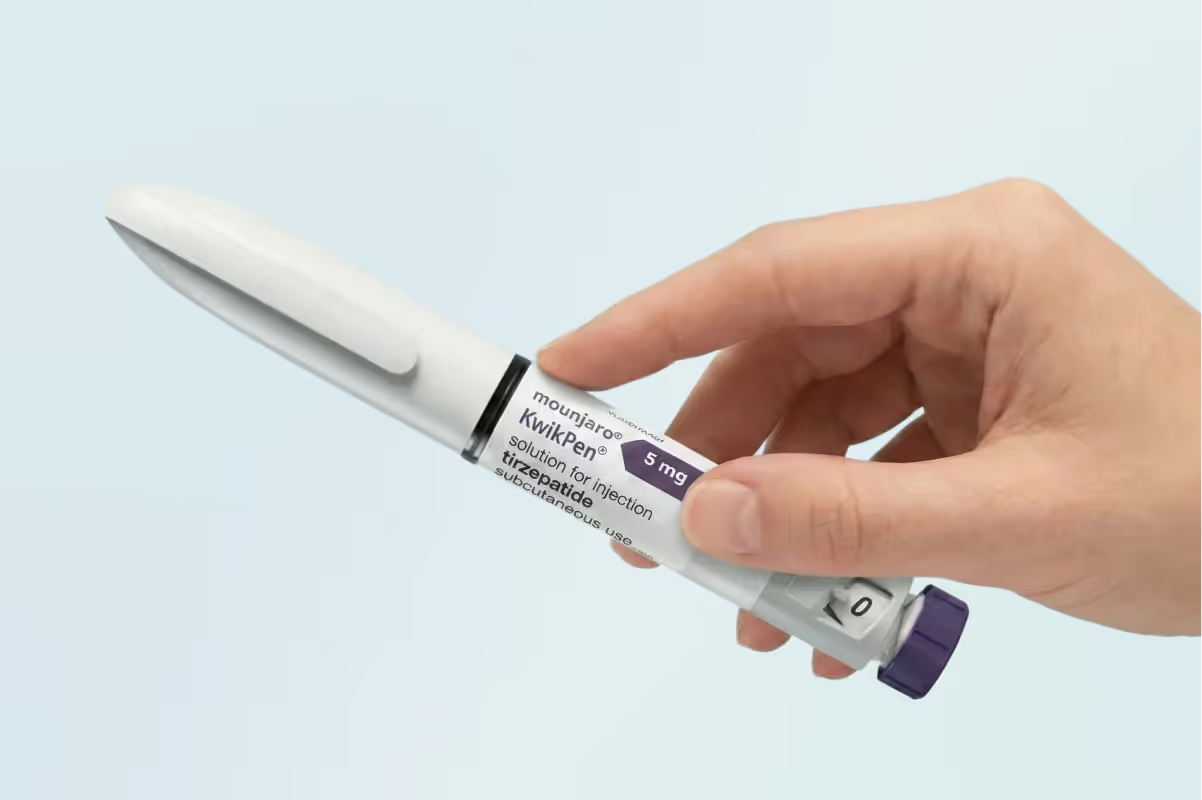
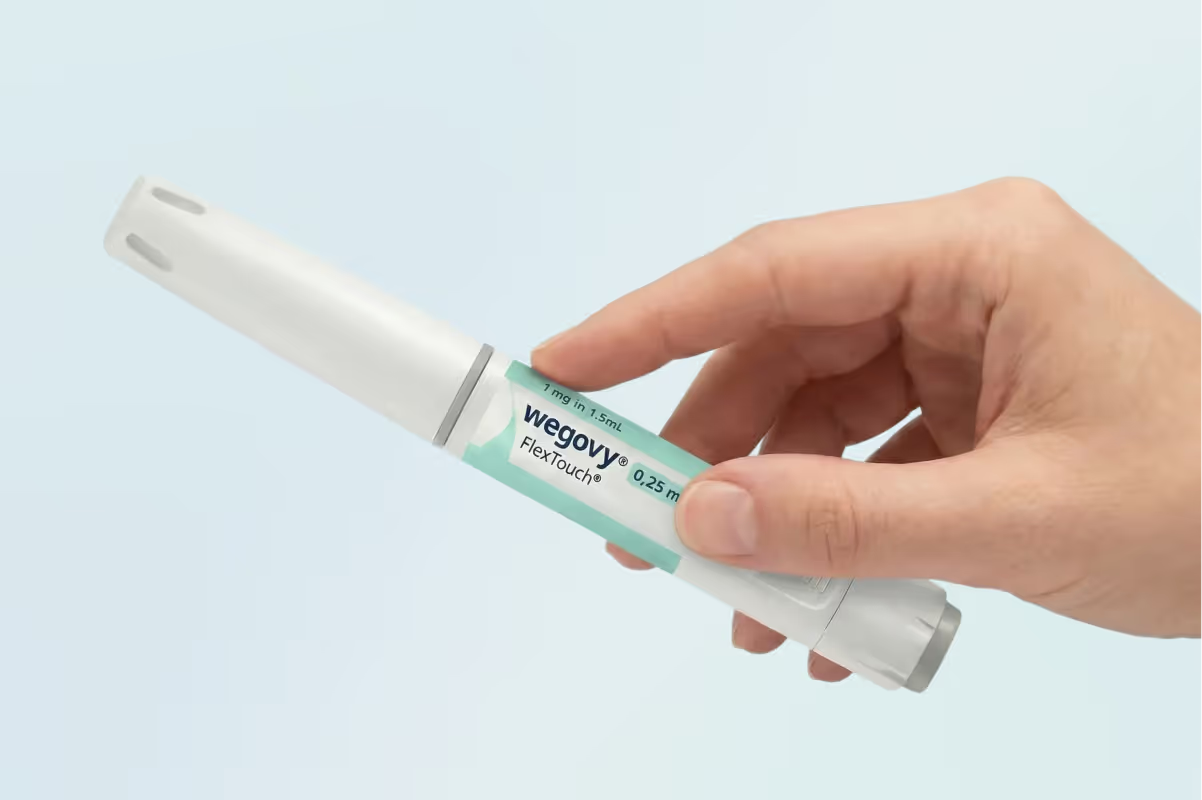
Mounjaro (tirzepatide) is a once-weekly injectable medication licensed in the UK for weight management and for treating type 2 diabetes in adults. As a dual GIP and GLP-1 receptor agonist, it improves blood glucose control and supports weight management. Understanding Mounjaro cost in the UK is essential for patients considering this treatment, whether through NHS prescription (standard prescription charge applies) or private routes (typically £133.99–£274.99 (price-comparison listing, checked 17 October 2026) monthly). Costs vary based on dose strength, provider, and eligibility for NHS funding. This article examines pricing structures, NHS availability criteria, private prescription options, and practical strategies to reduce treatment costs whilst ensuring safe, regulated access.
Summary: Mounjaro costs the standard NHS prescription charge (£9.90 per item in England) when prescribed through the NHS, or typically £133.99–£274.99 (price-comparison listing, checked 17 October 2026) per month via private prescription, depending on dose strength and provider. Bolt Pharmacy charges £149–£299 per month (boltpharmacy.co.uk, checked 17 October 2026); see current pricing.
- Tirzepatide is a dual GIP/GLP-1 receptor agonist licensed for weight management and type 2 diabetes treatment in UK adults, administered once weekly by subcutaneous injection.
- NHS availability is limited to patients meeting specific NICE and local ICB eligibility criteria, with regional variation in access.
- Private prescription costs range from £133.99–£274.99 monthly, varying by dose strength (2.5–15 mg).
- Common adverse effects include gastrointestinal symptoms; seek urgent care for severe abdominal pain (possible pancreatitis) or gallbladder symptoms.
- Oral contraceptive effectiveness may be reduced; use additional non-oral contraception for 4 weeks after starting and after each dose increase.
- Only purchase from GPhC-registered UK pharmacies with valid prescriptions from GMC-registered prescribers; avoid unregulated online sources.
Table of Contents
What Is Mounjaro and What Is It Used For?
Mounjaro (tirzepatide) is a prescription medicine licensed in the UK for weight management and for the treatment of type 2 diabetes mellitus in adults. It is used as an adjunct to diet and exercise to improve glycaemic control, either as monotherapy when metformin is inappropriate, or as add-on therapy to other diabetes medications. Mounjaro belongs to a novel class of medications known as dual glucose-dependent insulinotropic polypeptide (GIP) and glucagon-like peptide-1 (GLP-1) receptor agonists. By activating both GIP and GLP-1 receptors, Mounjaro enhances insulin secretion in response to elevated blood glucose levels, suppresses glucagon release, slows gastric emptying, and reduces appetite.
This dual mechanism of action offers significant benefits for glycaemic control and weight management. Clinical trials have demonstrated that tirzepatide can reduce HbA1c levels substantially and promote clinically meaningful weight loss in individuals with type 2 diabetes.[22][23] The medication is administered once weekly via subcutaneous injection using a pre-filled pen device, which many patients find convenient compared to daily injections.
Key indications for Mounjaro include:
-
Adults with type 2 diabetes inadequately controlled on metformin and/or other oral antidiabetic agents
-
Adults with type 2 diabetes when metformin is not appropriate
-
Patients requiring additional glycaemic control alongside lifestyle modifications (diet and exercise)
Mounjaro is not licensed for the treatment of type 1 diabetes or diabetic ketoacidosis. It is not recommended for use in patients under 18 years of age. When starting Mounjaro, dose reduction of insulin or sulfonylureas may be necessary to reduce the risk of hypoglycaemia.
Important safety considerations include:
-
Seek urgent medical attention for severe, persistent abdominal pain (possible pancreatitis) or symptoms of gallbladder disease
-
Tirzepatide can reduce the effectiveness of oral contraceptives; use non-oral contraception or add a barrier method for 4 weeks after starting and after each dose increase[5][10]
-
Patients with diabetic retinopathy should be monitored closely, as rapid improvement in glucose control may temporarily worsen retinopathy[5][14]
-
Avoid use in pregnancy and breastfeeding; discuss contraception and pre-conception planning with your prescriber
Patients should be counselled on proper injection technique, storage requirements, and the importance of adherence to achieve optimal therapeutic outcomes. As with all diabetes medications, individual response varies, and treatment should be tailored to each patient's clinical needs and tolerability. Report any suspected side effects to the MHRA Yellow Card scheme (yellowcard.mhra.gov.uk).
How Much Does Mounjaro Cost in the UK?
The cost of Mounjaro in the UK varies considerably depending on whether it is obtained through the NHS or via private prescription. Understanding the pricing structure is essential for patients and healthcare professionals when considering this treatment option.
NHS prescription costs: When prescribed on the NHS, patients pay the standard NHS prescription charge (currently £9.90 per item in England), unless they qualify for an exemption. Those with multiple prescriptions may benefit from a prescription prepayment certificate. Hospital-supplied medications may not attract a prescription charge, depending on local arrangements.
Private prescription costs for Mounjaro typically range from £133.99–£274.99 (price-comparison listing, checked 17 October 2026) per month, depending on the dose strength and the pharmacy or online prescribing service used. According to the British National Formulary (BNF), the NHS list price for a pack of one KwikPen containing four weekly doses ranges from approximately £73.25 (2.5mg) to £115.90 (15mg), though private patients will pay more due to additional dispensing fees and service charges. The medication is available in multiple dose strengths (2.5 mg, 5 mg, 7.5 mg, 10 mg, 12.5 mg, and 15 mg), with higher doses generally commanding higher prices.
Several factors influence the final cost to patients:
-
Dose escalation schedule: Treatment typically begins at 2.5 mg weekly, with gradual increases every four weeks based on glycaemic response and tolerability
-
Pharmacy or service provider: Online prescribing platforms, high-street pharmacies, and specialist weight management clinics may charge different dispensing fees
-
Additional monitoring: Blood tests and clinical reviews add to the overall treatment cost
It is important to note that these are approximate figures, and prices may fluctuate based on market conditions, supply chain factors, and individual provider pricing policies. National supply constraints for GLP-1 receptor agonists, as periodically reported by NHS England, can also affect availability and pricing. Patients considering private treatment should obtain detailed cost breakdowns from their chosen provider, including all associated prescriptions, and ongoing monitoring.
NHS Availability and Prescription Criteria for Mounjaro
Mounjaro's availability on the NHS is currently limited and subject to specific eligibility criteria. The National Institute for Health and Care Excellence (NICE) has evaluated tirzepatide for type 2 diabetes, and NHS prescribing is guided by this assessment alongside local Integrated Care Board (ICB) formulary decisions.[17][18]
Current NHS prescribing status: As of the latest guidance, Mounjaro may be prescribed on the NHS for adults with type 2 diabetes who meet specific clinical criteria outlined in the NICE technology appraisal and local ICB policies. However, availability varies significantly across different regions, with some areas restricting access due to budget constraints, supply limitations, or prioritising alternative treatments.
NHS eligibility considerations typically include:
-
Confirmed diagnosis of type 2 diabetes with inadequate glycaemic control despite optimised treatment with other antidiabetic medications
-
Body mass index (BMI) considerations, particularly where weight loss would provide additional clinical benefit
-
Previous response to or suitability for other GLP-1 receptor agonists
-
Commitment to lifestyle modification programmes, including dietary changes and increased physical activity
Depending on local ICB policies, initiation may be restricted to specialist diabetes teams or may be permitted in primary care. Regular monitoring is mandatory, including assessment of HbA1c levels, weight, renal function, and tolerability. Treatment continuation typically depends on demonstrable clinical benefit, with many areas following NICE guidance for GLP-1 receptor agonists (NG28), which often requires an HbA1c reduction of at least 11 mmol/mol (1%) and weight loss of at least 3% at 6 months.[19][20]
Patients with pre-existing diabetic retinopathy should have appropriate monitoring, as rapid improvement in glucose control may be associated with temporary worsening of retinopathy. Those taking sulfonylureas or insulin may need dose adjustments to prevent hypoglycaemia when starting Mounjaro.
It's worth noting that NHS England periodically issues guidance on GLP-1 receptor agonist supply constraints, which may affect access to Mounjaro.[21] Patients seeking NHS-funded treatment should discuss their eligibility with their GP or diabetes specialist nurse, who can provide information on local prescribing policies and alternative treatment options if Mounjaro is not available in their area.
Private Prescription Options and Pricing
For patients who do not meet NHS criteria or face long waiting times, private prescription represents an alternative route to accessing Mounjaro. Several legitimate pathways exist, each with distinct advantages and cost implications.
Private GP or endocrinologist consultations: Patients can arrange appointments with private diabetes specialists or GPs who offer private prescribing services. Initial consultations. These consultations include comprehensive medical history review, physical examination, and discussion of treatment goals. The prescriber will assess suitability, explain potential adverse effects, and arrange baseline investigations such as HbA1c, renal function tests, and lipid profiles.
Online prescribing services: Regulated online platforms offering remote consultations have become increasingly popular. These services typically charge £30–£80 for initial assessments conducted via questionnaire and video consultation with a registered prescriber. Whilst convenient and often more affordable than face-to-face appointments, patients should verify that the service is registered with the Care Quality Commission (CQC), that the supplying pharmacy is registered with the General Pharmaceutical Council (GPhC), and that prescribers are registered with the appropriate professional body (GMC, NMC, or GPhC).
Pricing breakdown for private Mounjaro treatment:
-
Starter dose (2.5 mg): £133.99–£274.99 per month
-
Maintenance doses (5–15 mg): £133.99–£274.99 per month
-
Initial consultation: £133.99–£274.99 (one-off)
-
Follow-up consultations: £133.99–£274.99 (every 3–6 months)
-
Blood tests: £133.99–£274.99 per panel (if not included)
Some private providers offer subscription packages that bundle medication, consultations, and monitoring into monthly payments, potentially offering better value than pay-as-you-go arrangements. However, patients should carefully review terms and conditions, particularly regarding cancellation policies and minimum contract periods.
It is essential to ensure that any private prescriber conducts appropriate clinical assessments and provides ongoing monitoring. Key safety considerations include:
-
Gastrointestinal side effects (nausea, vomiting, diarrhoea) are common, especially when starting treatment
-
Seek urgent medical attention for severe, persistent abdominal pain which could indicate pancreatitis
-
Report symptoms of gallbladder disease (pain in right upper abdomen, fever, yellowing of skin/eyes)
-
Maintain adequate hydration, especially if experiencing vomiting or diarrhoea
-
If also taking insulin or sulfonylureas, dose adjustments may be needed to prevent hypoglycaemia
-
Women using oral contraceptives should use additional contraceptive methods for 4 weeks after starting and after each dose increase
Patients should report any suspected adverse reactions to the MHRA Yellow Card scheme (yellowcard.mhra.gov.uk).
Ways to Reduce the Cost of Mounjaro Treatment
Given the substantial cost of Mounjaro, patients may benefit from exploring strategies to reduce their financial burden whilst maintaining safe and effective treatment.
Explore NHS eligibility thoroughly: Before committing to private treatment, patients should have a detailed discussion with their GP or diabetes specialist about NHS access. Local ICB formulary policies are periodically updated in line with NICE guidance. If initially ineligible, patients may qualify after trying other treatment options or if their clinical condition changes. Requesting a referral to a specialist diabetes clinic may open additional NHS pathways.
Compare private providers: Prices vary significantly between pharmacies, online services, and clinics. Obtaining quotes from multiple legitimate providers can identify more competitive pricing. However, the cheapest option is not always the best—prioritise providers with transparent pricing, qualified prescribers, and comprehensive monitoring protocols. Always verify CQC registration for service providers and GPhC registration for dispensing pharmacies.
Consider dose optimisation: Working closely with a prescriber to find the lowest effective dose can reduce costs. Some patients achieve adequate glycaemic control and weight loss on lower maintenance doses (5 mg or 7.5 mg) rather than maximum doses (12.5 mg or 15 mg), potentially saving £133.99–£274.99 monthly.
Optimise complementary lifestyle measures: Maximising the effectiveness of Mounjaro through rigorous dietary modification, regular physical activity, and weight management support can potentially allow for shorter treatment duration or lower doses, reducing overall costs. NHS-provided structured education programmes for diabetes management are free and can help optimise outcomes.
Check NHS prescription exemption status: If prescribed through the NHS, check whether you qualify for free prescriptions due to age, income, specific medical conditions, or pregnancy. A prescription prepayment certificate can offer significant savings for those requiring multiple prescriptions.
Review private health insurance: While uncommon, some comprehensive private medical insurance policies may contribute towards specialist-prescribed medications. Check policy details carefully, as most UK health insurance plans exclude routine outpatient prescriptions.
Important safety note: Patients should never purchase Mounjaro from unregulated online sources, social media sellers, or overseas suppliers without valid UK prescriptions. Counterfeit or improperly stored medications pose serious health risks. All purchases should be from registered UK pharmacies with valid prescriptions from GMC-registered prescribers.
Be aware that national supply constraints for GLP-1 receptor agonists, as periodically reported by NHS England, may affect availability through both NHS and private routes.
Scientific References
- MHRA authorises diabetes drug Mounjaro (tirzepatide) for weight management and weight loss.
- Four-dose Mounjaro KwikPen approved by MHRA for diabetes and weight management.
- Tirzepatide. British National Formulary.
- Mounjaro (tirzepatide) EPAR – Product Information (SmPC).
- Mounjaro KwikPen 2.5 mg solution for injection in pre-filled pen – Summary of Product Characteristics.
- Mounjaro KwikPen 10 mg solution for injection in pre-filled pen – Summary of Product Characteristics.
- Mounjaro EPAR – Public Assessment Report.
- Tirzepatide, a dual GIP/GLP-1 receptor co-agonist for the treatment of type 2 diabetes.
- GLP-1 medicines for weight loss and diabetes: what you need to know.
- The impact of tirzepatide and glucagon-like peptide 1 receptor agonists on absorption of oral hormonal contraceptives.
- Tirzepatide – Interactions. British National Formulary.
- NHS prescription charges from 1 May 2024.
- NHS prescription charges.
- Early worsening of diabetic retinopathy in individuals with type 2 diabetes treated with tirzepatide.
- GLP-1 RAs and ophthalmic complications in patients with type 2 diabetes.
- Tirzepatide – Medicinal forms. British National Formulary.
- Tirzepatide for treating type 2 diabetes (TA924).
- Tirzepatide for treating type 2 diabetes – Recommendations (TA924).
- Type 2 diabetes in adults: management (NG28).
- NG28 Type 2 diabetes: summary of medicines recommendations.
- MHRA updates guidance for GLP-1 prescribers and patients.
- Efficacy and safety of a novel dual GIP and GLP-1 receptor agonist tirzepatide in patients with type 2 diabetes (SURPASS-1).
- Tirzepatide versus semaglutide once weekly in patients with type 2 diabetes (SURPASS-2).
- HbA1c reduction with tirzepatide in people with type 2 diabetes.
- Real-world effectiveness of tirzepatide versus semaglutide on HbA1c and weight in type 2 diabetes.
Frequently Asked Questions
How much does Mounjaro cost on the NHS?
When prescribed on the NHS, Mounjaro costs the standard NHS prescription charge of £9.90 per item in England, unless you qualify for an exemption. Availability depends on meeting specific NICE and local ICB eligibility criteria for type 2 diabetes treatment.
What is the typical monthly cost of private Mounjaro prescriptions?
Private Mounjaro prescriptions typically cost £133.99–£274.99 (price-comparison listing, checked 17 October 2026) per month, depending on dose strength (2.5–15 mg) and provider. Additional costs include initial consultations (£133.99–£274.99) and follow-up appointments, with higher doses generally commanding higher prices.
Can I reduce the cost of Mounjaro treatment?
Yes, strategies include exploring NHS eligibility thoroughly with your GP, comparing prices between legitimate private providers, optimising to the lowest effective dose with your prescriber, and checking prescription exemption status. Always use GPhC-registered pharmacies with valid prescriptions.
The health-related content published on this site is based on credible scientific sources and is periodically reviewed to ensure accuracy and relevance. Although we aim to reflect the most current medical knowledge, the material is meant for general education and awareness only.
The information on this site is not a substitute for professional medical advice. For any health concerns, please speak with a qualified medical professional. By using this information, you acknowledge responsibility for any decisions made and understand we are not liable for any consequences that may result.
Any third-party brands or services referenced on this site are included for informational purposes only; we are entirely independent and have no affiliation, partnership, or collaboration with any companies mentioned.