Wegovy on the NHS: Cost, Eligibility & Results

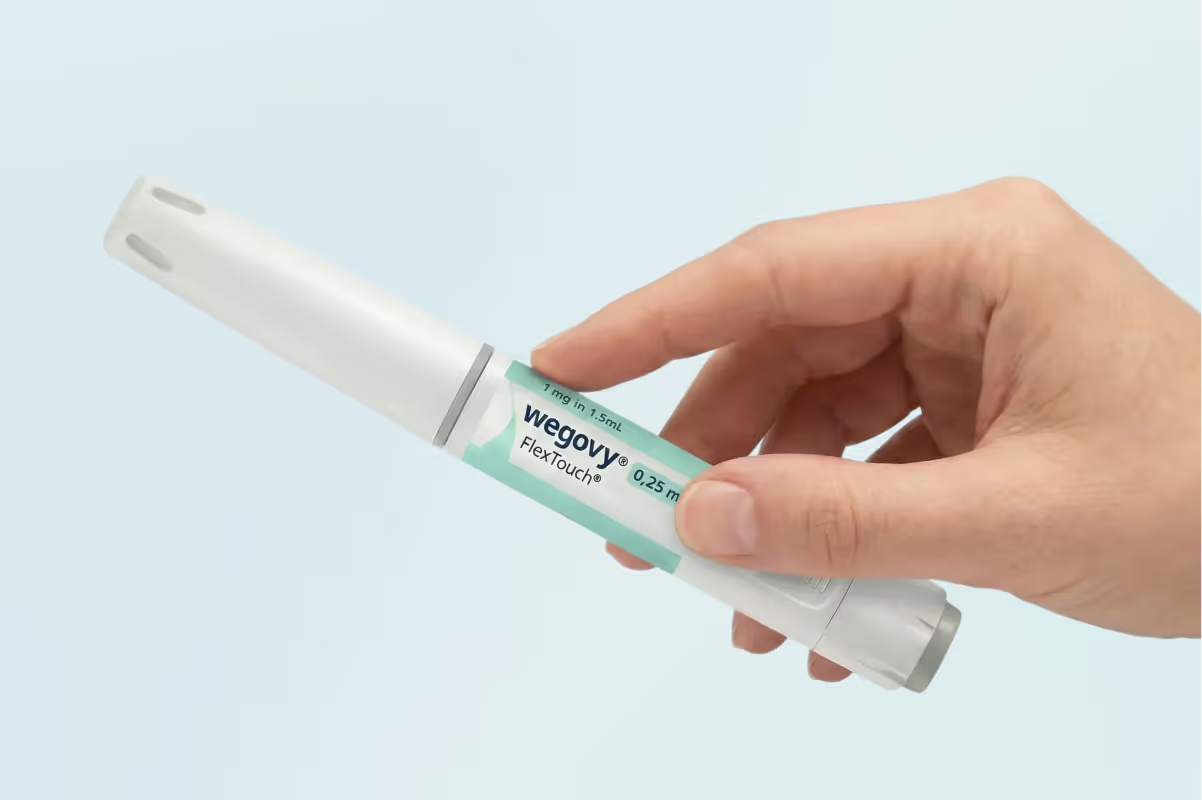
Wegovy (semaglutide 2.4 mg) is a once-weekly injection licensed by the MHRA for chronic weight management in adults with obesity or overweight with weight-related comorbidities. As a glucagon-like peptide-1 (GLP-1) receptor agonist, it works by reducing appetite, slowing gastric emptying, and decreasing food cravings. NHS access is limited by strict eligibility criteria and supply constraints, with treatment typically restricted to specialist weight management services. Private prescription remains an alternative, though costs are substantial. Understanding Wegovy's mechanism, eligibility requirements, expected outcomes, and safety profile is essential for informed decision-making about this weight management option.
Summary: Wegovy (semaglutide 2.4 mg) is a once-weekly GLP-1 receptor agonist injection licensed for chronic weight management, available on NHS with strict eligibility criteria or privately at approximately £83.99–£213.54 (typical across 73 UK pharmacies, collected on 19 October 2026; MSH Weight Loss does not publish its own price) monthly. Bolt Pharmacy charges £99–£209 per month (boltpharmacy.co.uk, checked 19 October 2026); see current pricing.
- Wegovy works by mimicking GLP-1 hormone to reduce appetite, slow gastric emptying, and decrease food cravings through action on brain appetite centres.
- NHS eligibility requires BMI ≥35 kg/m² with weight-related comorbidity, treatment within specialist services, and maximum 2-year duration under NICE TA875 guidance.
- Clinical trials showed average weight loss of 14.9% over 68 weeks when combined with lifestyle intervention, with two-thirds of participants losing at least 10% body weight.
- Common side effects include nausea (44%), diarrhoea (30%), and vomiting (24%), typically mild to moderate and diminishing during dose escalation from 0.25 mg to 2.4 mg maintenance dose.
- Treatment requires ongoing dietary modification and physical activity; weight regain of approximately two-thirds occurs within one year if medication is discontinued.
- Serious but rare adverse effects include acute pancreatitis, gallbladder disease, and acute kidney injury; patients should report persistent vomiting or severe abdominal pain immediately.
Table of Contents
What Is Wegovy and How Does It Work for Weight Loss?
Wegovy (semaglutide 2.4 mg) is a once-weekly subcutaneous injection licensed by the MHRA for chronic weight management in adults with obesity (BMI ≥30 kg/m²) or overweight (BMI ≥27 kg/m²) with at least one weight-related comorbidity. It belongs to a class of medications called glucagon-like peptide-1 (GLP-1) receptor agonists, originally developed for type 2 diabetes management but now recognised for their significant weight loss effects.[1][4]
The mechanism of action centres on mimicking the naturally occurring hormone GLP-1, which is released from the gut after eating. Semaglutide binds to GLP-1 receptors in multiple areas of the body, including the brain's appetite regulation centres. This produces several complementary effects: it slows gastric emptying, meaning food remains in the stomach longer and creates a prolonged feeling of fullness; it reduces appetite by acting on hypothalamic pathways that control hunger signals; and it decreases food cravings, particularly for high-calorie foods.
Clinically, patients typically report feeling satisfied with smaller portion sizes and experiencing reduced between-meal hunger. The medication also influences insulin secretion in a glucose-dependent manner, though this is secondary to its weight loss mechanism. Wegovy is administered via a pre-filled pen injector, with doses gradually increased over 16–20 weeks from an initial 0.25 mg to the maintenance dose of 2.4 mg weekly. This dose escalation schedule (0.25→0.5→1.0→1.7→2.4 mg) is essential to minimise gastrointestinal side effects and improve tolerability.
Injections can be administered in the abdomen, thigh, or upper arm, and injection sites should be rotated.[1] If a dose is missed, patients should administer it as soon as possible within 5 days; if more than 5 days have passed, they should skip that dose and resume the schedule with the next planned dose.[1]
It is crucial to understand that Wegovy is not a standalone solution. The medication must be used alongside a reduced-calorie diet and increased physical activity as part of a comprehensive weight management programme.[1][5] NHS guidance emphasises that pharmacological interventions should complement, not replace, lifestyle modifications for sustainable weight loss outcomes.
NHS Eligibility Criteria for Wegovy Prescription
Access to Wegovy on the NHS is governed by specific eligibility criteria established by NICE Technology Appraisal 875 (TA875) and implemented through local integrated care boards (ICBs). These criteria ensure the medication is prescribed to those most likely to benefit while managing NHS resources appropriately.
NHS-funded eligibility requirements include:
-
Body Mass Index (BMI) ≥35 kg/m² with at least one weight-related comorbidity (such as type 2 diabetes, hypertension, dyslipidaemia, obstructive sleep apnoea, or cardiovascular disease)
-
For individuals from South Asian, Chinese, other Asian, Middle Eastern, Black African or African-Caribbean backgrounds, the BMI threshold is reduced by 2.5 kg/m² (to ≥32.5 kg/m²) due to increased metabolic risk at lower BMI
-
Treatment must be provided within a specialist weight management service (tier 3 or 4)
-
Treatment duration is limited to a maximum of 2 years under NHS funding
Patients must also demonstrate commitment to ongoing dietary modification and physical activity programmes. Regular monitoring appointments are required to assess treatment response.
Cautions and special considerations include pregnancy or planning pregnancy, breastfeeding, history of pancreatitis, and severe gastrointestinal disease. While animal studies identified thyroid C-cell tumours with GLP-1 agonists, the relevance to humans is unknown. Nevertheless, patients should discuss any personal or family history of medullary thyroid carcinoma with their healthcare provider.[1][6]
NHS availability remains limited due to supply constraints and commissioning decisions. Many ICBs have implemented waiting lists or restricted prescribing to specialist weight management services only. Patients should discuss potential eligibility with their GP, who may refer to specialist services for assessment.
Private prescription is an alternative option, though costs are substantial (typically £83.99–£213.54 (typical across 73 UK pharmacies, collected on 19 October 2026; MSH Weight Loss does not publish its own price) monthly as of early 2024). Private prescribing follows the licensed indication in the Summary of Product Characteristics (SmPC) rather than the more restrictive NHS criteria, but patients must still meet clinical suitability requirements for safe prescribing.
Expected Weight Loss Results with Wegovy
Clinical trial evidence provides robust data on expected weight loss outcomes with Wegovy. The landmark STEP (Semaglutide Treatment Effect in People with obesity) trials demonstrated substantial and sustained weight reduction when the medication is used as part of a comprehensive weight management programme.
In the STEP 1 trial published in the New England Journal of Medicine (2021), participants using Wegovy 2.4 mg weekly alongside lifestyle intervention achieved an average weight loss of 14.9% of initial body weight over 68 weeks, compared to 2.4% in the placebo group. Approximately two-thirds of participants lost at least 10% of their starting weight, and nearly one-third lost 20% or more.[3] For a person weighing 100 kg at baseline, this translates to an average loss of approximately 15 kg over 16 months.
Weight loss typically follows a predictable pattern: initial losses are often modest during the dose escalation phase (first 4 months), with more substantial reductions occurring once the maintenance dose of 2.4 mg is reached. Peak weight loss generally occurs between 60–68 weeks of treatment, after which weight tends to stabilise if treatment continues.[3]
Importantly, individual responses vary considerably. Factors influencing outcomes include:
-
Adherence to lifestyle modifications – diet and exercise remain fundamental
-
Baseline metabolic health and comorbidities
-
Genetic factors affecting GLP-1 receptor sensitivity
-
Consistency with weekly injections
-
Tolerance of side effects
Specialist weight management services will periodically review treatment response according to local protocols. Continuation of treatment should be based on clinically meaningful benefits and in line with specialist service guidance.
Weight regain is common if Wegovy is discontinued. The STEP 4 trial showed that participants who stopped treatment regained approximately two-thirds of their lost weight within one year, highlighting the medication's role in ongoing weight maintenance rather than a temporary intervention.[2] Under NHS funding criteria (NICE TA875), treatment duration is limited to a maximum of 2 years.
Side Effects and Safety Considerations
Understanding potential adverse effects is essential for informed decision-making and safe use of Wegovy. The medication's side effect profile is well-characterised from extensive clinical trial data and post-marketing surveillance.
Gastrointestinal effects are the most common adverse reactions, affecting the majority of users to some degree:
-
Nausea (44% of users) – typically most pronounced during dose escalation
-
Diarrhoea (30%) and constipation (24%)
-
Vomiting (24%), abdominal pain, and dyspepsia
-
Gastro-oesophageal reflux disease symptoms
Other common side effects include headache, fatigue, dizziness, and injection site reactions such as redness or itching.
These effects are usually mild to moderate and diminish over time as the body adapts. The gradual dose titration schedule specifically aims to improve gastrointestinal tolerability. Patients can minimise symptoms by eating smaller, more frequent meals, avoiding high-fat foods, and staying well-hydrated.
Serious but rare adverse effects require immediate medical attention:
-
Acute pancreatitis – persistent severe abdominal pain radiating to the back warrants emergency assessment
-
Gallbladder disease – rapid weight loss increases cholelithiasis risk
-
Acute kidney injury – usually secondary to severe dehydration from vomiting/diarrhoea
-
Diabetic retinopathy complications in patients with pre-existing diabetes – appropriate eye monitoring is recommended
-
Hypoglycaemia – particularly when used with insulin or sulfonylureas; medication review may be needed
Thyroid considerations: Animal studies identified thyroid C-cell tumours with GLP-1 agonists, though the relevance to humans is unknown. Patients should discuss any personal or family history of medullary thyroid carcinoma with their healthcare provider.[1][6]
Patient safety advice includes:
-
Report persistent vomiting or signs of dehydration immediately
-
Seek urgent medical review for severe abdominal pain
-
Monitor for mood changes and seek medical help if these occur
-
Ensure adequate hydration, especially during gastrointestinal symptoms
-
Attend scheduled monitoring appointments for weight, blood pressure, and metabolic parameters
Wegovy should be discontinued at least 2 months before a planned pregnancy. It should be avoided during pregnancy and is not recommended during breastfeeding. Women of childbearing potential should use effective contraception while taking the medication.
If you experience any side effects, talk to your healthcare professional. You can also report side effects directly via the MHRA Yellow Card Scheme at yellowcard.mhra.gov.uk or search for 'MHRA Yellow Card' in the Google Play or Apple App Store.
Scientific References
- Wegovy 0.25 mg, FlexTouch solution for injection in pre-filled pen - Summary of Product Characteristics.
- Semaglutide for managing overweight and obesity. Technology appraisal guidance [TA875].
- Once-Weekly Semaglutide in Adults with Overweight or Obesity.
- Wegovy - European Public Assessment Report.
- Obesity - Treatment.
- GLP-1 receptor agonists: reminder of the potential side effects and to be aware of the potential for misuse.
Frequently Asked Questions
How much does Wegovy cost on private prescription in the UK?
Wegovy typically costs £83.99–£213.54 (typical across 73 UK pharmacies, collected on 19 October 2026; MSH Weight Loss does not publish its own price) per month on private prescription as of early 2024. NHS access is limited by strict eligibility criteria requiring BMI ≥35 kg/m² with weight-related comorbidity and treatment within specialist weight management services for a maximum of 2 years.
What are the NHS eligibility criteria for Wegovy?
NHS eligibility requires BMI ≥35 kg/m² (or ≥32.5 kg/m² for South Asian, Chinese, other Asian, Middle Eastern, Black African or African-Caribbean backgrounds) with at least one weight-related comorbidity such as type 2 diabetes or hypertension. Treatment must be provided within specialist weight management services (tier 3 or 4) and is limited to a maximum of 2 years under NICE TA875 guidance.
What happens to weight loss after stopping Wegovy?
Clinical trials show that participants who stop Wegovy typically regain approximately two-thirds of their lost weight within one year of discontinuation. This highlights the medication's role in ongoing weight maintenance rather than as a temporary intervention, emphasising the importance of sustained lifestyle modifications.
The health-related content published on this site is based on credible scientific sources and is periodically reviewed to ensure accuracy and relevance. Although we aim to reflect the most current medical knowledge, the material is meant for general education and awareness only.
The information on this site is not a substitute for professional medical advice. For any health concerns, please speak with a qualified medical professional. By using this information, you acknowledge responsibility for any decisions made and understand we are not liable for any consequences that may result.
Any third-party brands or services referenced on this site are included for informational purposes only; we are entirely independent and have no affiliation, partnership, or collaboration with any companies mentioned.