Wegovy Cost UK: NHS & Private Prescription Prices

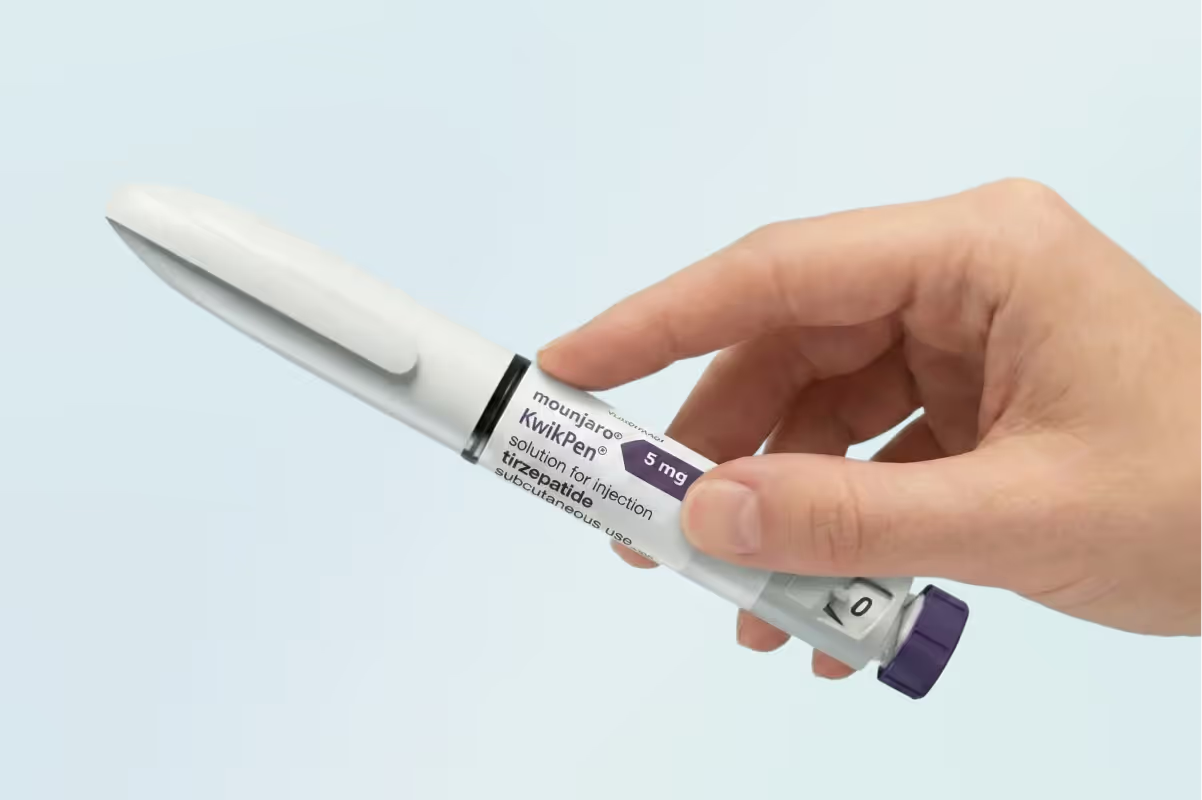
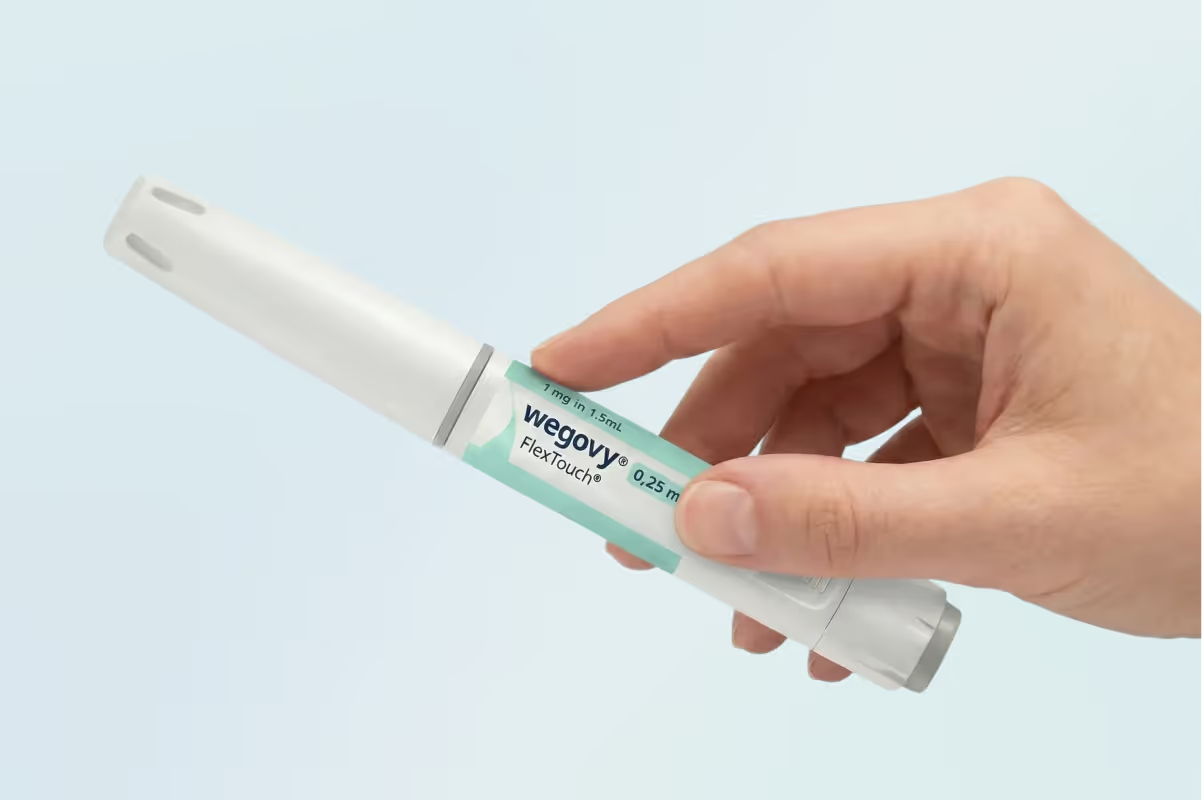
Wegovy (semaglutide 2.4 mg) is a prescription weight management medication licensed by the MHRA for adults with obesity or those who are overweight with weight-related health conditions. As a glucagon-like peptide-1 (GLP-1) receptor agonist, it works by reducing appetite and increasing feelings of fullness. Understanding the cost of Wegovy treatment is essential for patients considering this option, as expenses vary significantly between NHS and private prescriptions. This article examines the factors affecting Wegovy pricing, NHS eligibility criteria, and what to expect from private prescriptions, helping you make informed decisions about accessing this treatment in the UK.
Summary: Wegovy costs approximately £103.94–£303.94 (price-comparison listing, checked 27 September 2026) monthly for private prescriptions, whilst NHS prescriptions incur only standard prescription charges (£9.90 in England) when accessed through specialist weight management services under strict NICE eligibility criteria. Bolt Pharmacy charges £99–£239 per month (boltpharmacy.co.uk, checked 27 September 2026); see current pricing.
- Wegovy (semaglutide 2.4 mg) is a GLP-1 receptor agonist that reduces appetite by mimicking natural gut hormones and slowing gastric emptying.
- NHS access requires BMI ≥30 kg/m² with weight-related comorbidities, referral to specialist services, and is limited to two years under NICE guidance.
- Private treatment costs £1,250–£3,650 annually including consultations, medication, and monitoring through GMC-registered prescribers and GPhC-registered pharmacies.
- Treatment requires regular monitoring for side effects including nausea, pancreatitis risk, and must be discontinued at least two months before planned pregnancy.
Table of Contents
What Is Wegovy and How Does It Work?
Wegovy (semaglutide 2.4 mg) is a prescription medicine licensed by the Medicines and Healthcare products Regulatory Authority (MHRA) for weight management in adults with obesity or those who are overweight with weight-related health conditions. It belongs to a class of medications called glucagon-like peptide-1 (GLP-1) receptor agonists, originally developed for type 2 diabetes management but now recognised for their significant weight loss effects.[1][3]
The medication works by mimicking a naturally occurring hormone called GLP-1, which is released in the gut after eating. Semaglutide activates GLP-1 receptors in several areas of the body, including the brain, pancreas, and gastrointestinal tract. In the brain, it acts on appetite centres to reduce hunger and increase feelings of fullness, helping patients consume fewer calories naturally. It also slows gastric emptying, meaning food stays in the stomach longer, which contributes to prolonged satiety between meals.[3][1]
Wegovy is administered as a once-weekly subcutaneous injection using a pre-filled pen device. Treatment begins with a low dose that is gradually increased over 16 weeks to minimise gastrointestinal side effects such as nausea and vomiting.[1][2] The standard maintenance dose is 2.4 mg weekly, though some patients may remain on 1.7 mg if the higher dose is not tolerated. Clinical trials (STEP programme) have demonstrated that Wegovy, when combined with a reduced-calorie diet and increased physical activity, can lead to an average weight loss of 10-15% of initial body weight over 68 weeks, with greater effects typically seen in adults without diabetes.[13][14]
Key points about Wegovy:
-
Licensed for adults with a BMI of 30 kg/m² or above, or 27 kg/m² with weight-related comorbidities
-
Requires ongoing lifestyle modifications for optimal effectiveness
-
Must not be used with other GLP-1 receptor agonists or weight-loss medications
-
Not suitable for everyone—contraindicated in pregnancy and should be discontinued at least 2 months before planned pregnancy; not recommended during breastfeeding
-
Should only be prescribed by healthcare professionals experienced in weight management
-
Stop treatment and seek immediate medical attention if experiencing severe abdominal pain (possible pancreatitis or gallbladder problems), persistent vomiting, or signs of dehydration
-
Report suspected side effects via the MHRA Yellow Card Scheme (yellowcard.mhra.gov.uk)
| Cost Factor | NHS | Private |
|---|---|---|
| Prescription charge | £9.90 per item (free if exempt) | Full medication cost; approx. £200–£300/month |
| Estimated 12-month total | Standard prescription charges only | Approx. £1,250–£3,650 including consultations |
| Eligibility criteria | NICE criteria; BMI ≥35 with comorbidity (or ≥30 with comorbidity) | Assessed by private prescriber; broader access |
| Treatment duration limit | Maximum two years under NICE guidance | No fixed NHS limit; ongoing cost accumulates |
| Access pathway | GP referral to tier 3/4 specialist service; waiting times vary | Direct via GMC-registered prescriber or GPhC-registered online pharmacy |
What Affects the Price of Wegovy Treatment?
The cost of Wegovy treatment in the UK varies considerably depending on several factors, making it important for patients to understand what influences pricing. The medication itself represents a significant pharmaceutical expense, with monthly costs typically ranging from £103.94–£303.94 (price-comparison listing, checked 27 September 2026) for private prescriptions, though prices fluctuate based on supplier, pharmacy, and market availability.
Several key factors determine the overall cost of Wegovy treatment. Supply and demand dynamics play a substantial role—since its launch, Wegovy has experienced periodic supply shortages due to high global demand, which can affect both availability and pricing. Pharmaceutical wholesalers and pharmacies may adjust prices based on stock levels and procurement costs. Additionally, the duration of treatment significantly impacts total expenditure, as Wegovy is intended for long-term use rather than a short course. Most patients require ongoing treatment to maintain weight loss, meaning costs accumulate over months or years. It's worth noting that NHS treatment under NICE guidance is limited to a maximum of two years.
The prescribing route substantially affects what patients pay. NHS prescriptions, where available, incur only the standard prescription charge (currently £9.90 per item in England, with variations across UK nations and exemptions for eligible patients). Private prescriptions, however, require patients to pay the full medication cost. Consultation and monitoring costs must also be considered—private weight management services typically charge £50 to £200 for initial assessments and follow-up appointments, which are necessary for safe prescribing and dose adjustments.
Additional cost considerations include:
-
Pharmacy dispensing fees
-
Initial health assessments and blood tests
-
Ongoing monitoring appointments (usually monthly or quarterly)
-
Occasional short-term medications that may be needed to manage side effects if clinically indicated
Patients should request transparent pricing information upfront from their dispensing pharmacy, check current prices as these may change, and consider the total treatment cost over at least 12 months when evaluating affordability.
How to Access Wegovy Through the NHS
Accessing Wegovy through the NHS is currently limited and subject to strict eligibility criteria established by the National Institute for Health and Care Excellence (NICE). In March 2023, NICE recommended semaglutide 2.4 mg (Wegovy) for weight management in adults within specialist NHS weight management services, but implementation has been gradual due to supply constraints and service capacity limitations.
NICE eligibility criteria specify that Wegovy should be considered for adults with:
-
A BMI of 35 kg/m² or above with at least one weight-related comorbidity (such as hypertension, type 2 diabetes, obstructive sleep apnoea, or cardiovascular disease), or
-
A BMI of 30-34.9 kg/m² with at least one weight-related comorbidity
-
Evidence of previous unsuccessful weight management attempts through diet, exercise, and behavioural interventions
Lower BMI thresholds (typically reduced by 2.5 kg/m²) may be considered for people from some minority ethnic groups who are at equivalent risk at a lower BMI.
Patients must be referred to specialist NHS weight management services, which are typically tier 3 or tier 4 services staffed by multidisciplinary teams including dietitians, psychologists, and physicians. These services provide comprehensive support including dietary advice, physical activity programmes, and psychological interventions alongside medication when appropriate. Wegovy is prescribed only as part of this holistic approach, not as a standalone treatment.
The pathway to NHS access typically begins with your GP, who can assess your eligibility and refer you to local specialist services. Waiting times vary considerably across the UK, with some areas experiencing waits of several months due to high demand and limited service capacity. Once accepted into a specialist service, you will undergo thorough assessment including medical history review, physical examination, and blood tests to ensure Wegovy is safe and appropriate.
Important considerations for NHS access:
-
Treatment is reviewed regularly—continuation depends on achieving at least 5% weight loss after approximately 6 months on the maintenance dose or highest tolerated dose[6][5]
-
NHS treatment is limited to a maximum of two years under NICE guidance[8][5]
-
Prescriptions are provided at standard NHS prescription charges (or free if exempt)
-
While NICE recommendations must be funded nationally, practical availability depends on specialist service capacity and supply issues
Patients should discuss realistic timelines and alternatives with their GP if NHS access is not immediately available.
Private Wegovy Prescriptions: What to Expect
Private prescriptions offer an alternative route to accessing Wegovy for patients who do not meet NHS criteria, face long waiting times, or prefer the convenience of private healthcare. However, this option requires significant financial commitment and careful selection of reputable providers to ensure safe, legitimate treatment.
Private prescription costs typically include several components. Initial consultations with private GPs or weight management specialists range from £103.94–£303.94, during which your medical history, current medications, and suitability for Wegovy are assessed. The medication itself costs approximately £103.94–£303.94 per month, though prices vary between pharmacies and online services. Over a 12-month period, patients should budget £1,250–£3,650 for comprehensive private Wegovy treatment including consultations and medication.
Several types of private providers offer Wegovy prescriptions. Registered online pharmacies and telehealth services provide remote consultations and home delivery. These services offer convenience but require patients to complete detailed medical questionnaires and may include video consultations. Private GP clinics and weight management centres provide face-to-face consultations with more personalised care and comprehensive monitoring, though typically at higher cost.
Essential safety considerations when seeking private prescriptions:
-
Verify the prescriber is registered with the General Medical Council (GMC) via their online register at gmc-uk.org
-
Ensure the pharmacy is registered with the General Pharmaceutical Council (GPhC) via their register at pharmacyregulation.org
-
Avoid websites offering Wegovy without prescription—this is illegal and dangerous
-
Be wary of significantly discounted prices, which may indicate counterfeit products
-
Confirm the provider offers ongoing monitoring and support, not just one-off prescriptions
-
Inform your NHS GP about your private treatment to ensure coordinated care and accurate medical records
Reputable private providers will conduct thorough medical assessments, check for contraindications, discuss potential side effects, and arrange regular follow-up to monitor weight loss progress and manage any adverse effects. They should advise you not to combine Wegovy with other GLP-1 receptor agonists or weight-loss medications, and monitor for potential drug interactions (such as with warfarin or diabetes medications).[10][1] They should also provide clear information about when to stop treatment or seek urgent medical attention, such as experiencing severe abdominal pain, persistent vomiting, or signs of pancreatitis or dehydration.
Report any suspected side effects to the MHRA Yellow Card Scheme at yellowcard.mhra.gov.uk or via the Yellow Card app.
Scientific References
- Wegovy 2.4 mg, FlexTouch solution for injection in pre-filled pen – Summary of Product Characteristics (SmPC).
- Wegovy 1.7 mg, FlexTouch solution for injection in pre-filled pen – Summary of Product Characteristics (SmPC).
- Wegovy – EPAR Product Information (semaglutide).
- Wegovy – EPAR overview.
- Semaglutide for managing overweight and obesity – Technology Appraisal TA875.
- Semaglutide for managing overweight and obesity – TA875 Chapter 1: Recommendations.
- Review proposal of semaglutide for managing overweight and obesity – supporting documentation (TA1152).
- Semaglutide for managing overweight and obesity – supporting document (GID-TA10765).
- Semaglutide – drug monograph.
- Semaglutide – interactions.
- MHRA approves GLP-1 receptor agonist semaglutide to reduce risk of serious heart problems in obese or overweight adults.
- Medicines regulator approves up to 7.2 mg dose of semaglutide (Wegovy) for patients with obesity only.
- Once-Weekly Semaglutide in Adults with Overweight or Obesity (STEP 1) – Wilding JPH et al..
- Semaglutide 2.4 mg once a week in adults with overweight or obesity, and type 2 diabetes (STEP 2) – Davies M et al..
- Effect of Continued Weekly Subcutaneous Semaglutide vs Placebo on Weight Loss Maintenance (STEP 4) – Wadden TA et al..
- NHS prescription charges.
- NHS prescription charges from 1 May 2024.
Frequently Asked Questions
How much does Wegovy cost on a private prescription in the UK?
Private Wegovy prescriptions typically cost £103.94–£303.94 (price-comparison listing, checked 27 September 2026) per month for the medication alone. Over 12 months, patients should budget approximately £1,250–£3,650 for comprehensive private treatment including consultations and medication.
Can I get Wegovy free on the NHS?
Wegovy is available through NHS specialist weight management services for eligible patients meeting NICE criteria (BMI ≥30 kg/m² with weight-related comorbidities). Patients pay only standard NHS prescription charges (£9.90 per item in England, or free if exempt), though access depends on GP referral, specialist service capacity, and supply availability.
What factors affect the price of Wegovy treatment?
Wegovy pricing is influenced by supply and demand dynamics, periodic shortages, pharmacy dispensing fees, prescribing route (NHS versus private), consultation and monitoring costs, and treatment duration. Long-term use means costs accumulate over months or years, making total expenditure a key consideration when evaluating affordability.
The health-related content published on this site is based on credible scientific sources and is periodically reviewed to ensure accuracy and relevance. Although we aim to reflect the most current medical knowledge, the material is meant for general education and awareness only.
The information on this site is not a substitute for professional medical advice. For any health concerns, please speak with a qualified medical professional. By using this information, you acknowledge responsibility for any decisions made and understand we are not liable for any consequences that may result.
Any third-party brands or services referenced on this site are included for informational purposes only; we are entirely independent and have no affiliation, partnership, or collaboration with any companies mentioned.