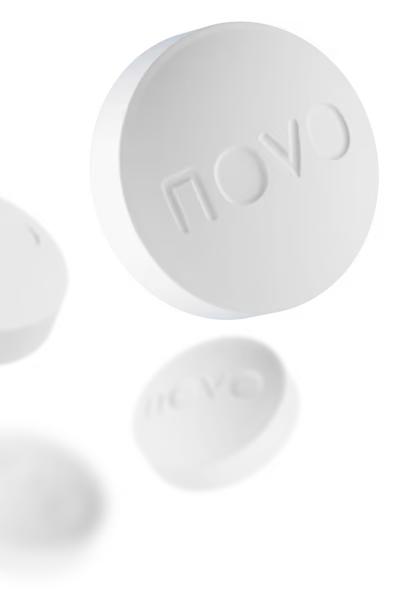
Retatrutide in Pill Form: What UK Patients Need to Know

Retatrutide in pill form is not currently available — and understanding why matters for anyone researching this investigational medicine. Retatrutide is a novel 'triple agonist' developed by Eli Lilly, targeting the GLP-1, GIP, and glucagon receptors simultaneously. It is administered exclusively by subcutaneous injection in clinical trials, and no oral formulation has been announced or registered as of April 2026. This article explains why peptide medicines like retatrutide are challenging to deliver orally, where retatrutide currently sits in its clinical development programme, and which licensed weight management medicines are available in the UK today.
Summary: Retatrutide is not available in pill form — it is administered exclusively by subcutaneous injection in clinical trials, and no oral formulation has been announced by Eli Lilly as of April 2026.
- Retatrutide is an investigational triple agonist targeting GLP-1, GIP, and glucagon receptors, developed by Eli Lilly.
- All current clinical trials use subcutaneous injection only; no oral (tablet or capsule) formulation has been registered or announced.
- Peptide drugs like retatrutide are broken down by digestive enzymes before absorption, making oral delivery technically challenging.
- Retatrutide has not received MHRA or EMA authorisation and cannot be legally prescribed in the UK outside of clinical trials.
- Any product claiming to offer retatrutide in tablet or capsule form is not a legitimate, clinically validated medicine.
- Licensed oral weight management options in the UK include orlistat; oral semaglutide (Rybelsus®) is licensed only for type 2 diabetes, not weight management.
Table of Contents
- What Is Retatrutide and How Is It Currently Administered?
- Why Most GLP-1 Medicines Are Given by Injection
- Retatrutide's Current Stage of Clinical Development in the UK
- Oral Weight Loss Medicines Available in the UK Right Now
- What to Discuss With Your GP or Prescriber
- Scientific References
- Frequently Asked Questions
| Medicine | Form | Mechanism | UK Licensed Indication | NICE Recommended | Availability |
|---|---|---|---|---|---|
| Retatrutide (investigational) | Subcutaneous injection only; no oral form exists | Triple agonist: GLP-1, GIP, and glucagon receptors | Not licensed; Phase 3 trials ongoing as of April 2026 | No | Clinical trials only; not legally prescribable in UK |
| Semaglutide 2.4 mg (Wegovy®) | Subcutaneous injection, once weekly | GLP-1 receptor agonist | Chronic weight management in adults | Yes — NICE TA875; BMI ≥35 with comorbidity (or ≥30 in higher-risk groups) | NHS via specialist Tier 3/4 weight management services |
| Tirzepatide (Mounjaro®) | Subcutaneous injection, once weekly | Dual GIP/GLP-1 receptor agonist | Weight management (MHRA authorised); type 2 diabetes | NICE appraisal ongoing at time of writing; check NICE website | Available; NHS access subject to NICE/commissioning decisions |
| Liraglutide 3 mg (Saxenda®) | Subcutaneous injection, once daily | GLP-1 receptor agonist | Chronic weight management in adults | Yes — NICE TA664; BMI ≥35 with prediabetes and high cardiovascular risk | NHS via specialist weight management services |
| Oral semaglutide (Rybelsus®) | Oral tablet, once daily | GLP-1 receptor agonist; uses SNAC absorption enhancer | Type 2 diabetes mellitus only; not licensed for weight management in UK | No (for weight management) | Available on NHS for type 2 diabetes; must not be used off-label for weight loss |
| Orlistat (Xenical® / Alli®) | Oral capsule; prescription (120 mg) or over-the-counter (60 mg) | Lipase inhibitor; reduces dietary fat absorption | Weight management in adults | Yes — see BNF and relevant SmPCs for eligibility criteria | Widely available; GI side effects common with high-fat diet |
What Is Retatrutide and How Is It Currently Administered?
Retatrutide is administered exclusively by subcutaneous injection; no oral formulation exists, and it has not received MHRA or EMA authorisation for use outside of clinical trials.
Retatrutide is an investigational medicine being developed by Eli Lilly and Company. It belongs to a novel class of agents sometimes referred to as 'triple agonists' because it simultaneously activates three hormone receptors: the glucagon-like peptide-1 (GLP-1) receptor, the glucose-dependent insulinotropic polypeptide (GIP) receptor, and the glucagon receptor. This triple mechanism of action is designed to reduce appetite and increase energy expenditure. Early clinical trial data also suggest improvements in metabolic health markers, though the precise contribution of each receptor pathway — including any effects on insulin sensitivity — remains under investigation and should be interpreted in the context of early-phase findings rather than established fact.
At present, retatrutide is administered exclusively as a subcutaneous injection, meaning it is injected under the skin, typically in the abdomen, thigh, or upper arm. This is the only delivery method that has been studied in clinical trials to date. No oral formulation of retatrutide has been publicly announced or registered in clinical trials as of April 2026 (based on available information from Eli Lilly's published pipeline and ClinicalTrials.gov). Patients and healthcare professionals should be aware that any product claiming to offer retatrutide in tablet or capsule form would not be a legitimate, clinically validated medicine.
Because retatrutide has not yet received regulatory authorisation from the Medicines and Healthcare products Regulatory Agency (MHRA) or the European Medicines Agency (EMA), it is not legally available for prescription in the UK outside of authorised clinical trials. Accessing it through unregulated online sources carries significant safety risks, including exposure to counterfeit or contaminated products. The MHRA publishes guidance on the risks of buying medicines online, which patients are encouraged to consult.
Why Most GLP-1 Medicines Are Given by Injection
GLP-1-based peptide medicines are injected because digestive enzymes rapidly break them down before oral absorption can occur, rendering conventional tablets or capsules ineffective.
The reason that GLP-1-based medicines — including retatrutide, semaglutide, and liraglutide — are predominantly delivered by injection relates directly to their chemical structure. These drugs are peptide molecules, meaning they are built from chains of amino acids. When taken orally, peptides are rapidly broken down by digestive enzymes in the stomach and small intestine before they can be absorbed into the bloodstream in meaningful quantities. This process, known as proteolytic degradation, renders most peptide drugs ineffective when swallowed in a conventional tablet or capsule.
To overcome this challenge, pharmaceutical scientists have explored several strategies:
-
Absorption enhancers: Chemical agents that temporarily increase the permeability of the gut lining to allow peptide absorption.
-
Enteric coatings: Protective coatings that shield the drug from stomach acid, allowing it to reach the intestine intact.
-
Modified peptide structures: Altering the molecular structure to resist enzymatic breakdown.
One notable success in this area is oral semaglutide (brand name Rybelsus®), which uses a proprietary absorption enhancer called SNAC (sodium N-[8-(2-hydroxybenzoyl) aminocaprylate]) to facilitate absorption in the stomach. According to the Rybelsus Summary of Product Characteristics (SmPC) published on the Electronic Medicines Compendium (EMC), oral bioavailability remains relatively low compared to the injectable form, and the tablet must be taken on an empty stomach with no more than half a glass of water (approximately 120 ml), with the patient remaining fasting for at least 30 minutes afterwards, to maximise absorption.[7][8]
Whether retatrutide's molecular structure would present additional formulation challenges compared with semaglutide is not established in the published literature; no credible source has confirmed or refuted this. Research in oral peptide delivery continues to advance across the pharmaceutical industry, but no oral version of retatrutide has been publicly announced by Eli Lilly at the time of writing.
Retatrutide's Current Stage of Clinical Development in the UK
Retatrutide is progressing through Phase 3 clinical trials as of April 2026 and cannot be legally prescribed in the UK until it completes trials and receives MHRA authorisation.
As of April 2026, retatrutide is understood to be progressing through Phase 3 clinical trials — large-scale studies designed to confirm efficacy and safety before a medicine can be submitted for regulatory approval. Readers are encouraged to check ClinicalTrials.gov and Eli Lilly's official communications for the most current trial status, as this information may change.
Phase 2 trial results, published in 2023 in the New England Journal of Medicine (Jastreboff et al., NEJM 2023), demonstrated that participants receiving the highest dose of retatrutide lost an average of approximately 24% of their body weight over 48 weeks — a finding that attracted considerable attention from the medical and scientific communities. It is important to contextualise these results carefully: Phase 2 trials involve relatively small, controlled populations and are not sufficient on their own to establish a medicine's full safety profile or its suitability for broad clinical use. Phase 3 trials across larger and more diverse populations are required before any regulatory submission can be made.
In the UK, the MHRA is responsible for evaluating and authorising new medicines. Until retatrutide completes its clinical trial programme and receives MHRA authorisation, it cannot be legally prescribed or dispensed outside of a formal research setting. Patients interested in participating in clinical trials can search for opportunities through NIHR Be Part of Research (bepartofresearch.nihr.ac.uk) or speak with their GP about eligibility.
Even after regulatory authorisation, a medicine must typically be assessed by the National Institute for Health and Care Excellence (NICE) before it becomes routinely available on the NHS. This process evaluates clinical and cost-effectiveness and involves a separate commissioning decision. The sequential nature of these steps — MHRA authorisation, followed by NICE appraisal, followed by NHS commissioning — means that routine NHS access to retatrutide, should it ultimately be approved, would follow a pathway similar to that of other recently authorised weight management medicines.
Oral Weight Loss Medicines Available in the UK Right Now
Licensed oral weight management options in the UK include orlistat (Xenical®/Alli®); injectable options include semaglutide (Wegovy®), liraglutide (Saxenda®), and tirzepatide (Mounjaro®), subject to NICE eligibility criteria.
For patients seeking licensed, evidence-based weight management medicines in the UK today, there are several options currently available, though access depends on clinical eligibility and local NHS commissioning decisions.
Injectable options with established authorisation:
-
Semaglutide 2.4 mg (Wegovy®): A once-weekly GLP-1 receptor agonist injection authorised by the MHRA for chronic weight management. NICE recommends it (Technology Appraisal TA875) for adults with a BMI of 35 kg/m² or above with at least one weight-related comorbidity, or a BMI of 30–34.9 kg/m² in certain higher-risk groups, when used within a specialist Tier 3 or Tier 4 weight management service alongside a reduced-calorie diet and increased physical activity. Treatment is recommended for a maximum of two years. Adjusted BMI thresholds apply for people from Black African, African-Caribbean, and South Asian family backgrounds. Patients should refer to NICE TA875 and the Wegovy SmPC (available on the EMC) for full eligibility criteria.
-
Liraglutide 3 mg (Saxenda®): A once-daily GLP-1 receptor agonist injection. NICE recommends it (Technology Appraisal TA664) for a more restricted population than semaglutide — specifically adults with a BMI of 35 kg/m² or above (with lower thresholds for certain ethnic groups) who also have prediabetes and a high risk of cardiovascular disease, and only when used within a specialist weight management service. Patients should refer to NICE TA664 and the Saxenda SmPC for full criteria.
-
Tirzepatide (Mounjaro®): A dual GIP/GLP-1 receptor agonist injection authorised by the MHRA.[15][16] Its NICE appraisal for weight management indications was ongoing at the time of writing; readers should check the NICE website and the Mounjaro SmPC on the EMC for the most current recommendation status and eligibility criteria.
Oral options:
-
Orlistat: A lipase inhibitor available in prescription strength (Xenical® 120 mg) and a lower-dose over-the-counter form (Alli® 60 mg). It works by reducing dietary fat absorption in the gut rather than acting on appetite hormones. It is suitable for some patients but is associated with gastrointestinal side effects, particularly if a high-fat diet is consumed. Eligibility criteria and contraindications are detailed in the BNF and the relevant SmPCs on the EMC.
-
Oral semaglutide (Rybelsus®): Currently licensed in the UK for the management of type 2 diabetes mellitus in adults. It is not licensed for weight management in the UK, and it should not be used for this purpose outside of its authorised indication.
Patients should not purchase weight loss medicines from unregulated online pharmacies, as counterfeit products pose serious health risks. All prescriptions should be obtained through a registered GP, specialist, or regulated online pharmacy registered with the General Pharmaceutical Council (GPhC).
What to Discuss With Your GP or Prescriber
Your GP can advise on eligibility for currently licensed weight management medicines, potential clinical trial participation, and the serious risks of sourcing unlicensed medicines online.
If you have been researching retatrutide and are wondering whether it might be suitable for you, the most important first step is to have an open and informed conversation with your GP or a qualified prescriber. Whilst retatrutide is not currently available in the UK outside of clinical trials, your GP can help you understand which licensed treatments may be appropriate for your individual circumstances, taking into account your medical history, current medications, and weight management goals.
When speaking with your GP, it may be helpful to discuss the following:
-
Your eligibility for currently recommended weight management medicines, such as semaglutide (Wegovy®) or tirzepatide (Mounjaro®), based on NICE criteria and local commissioning arrangements.
-
Whether you might qualify for a clinical trial involving investigational medicines such as retatrutide. Your GP can refer you to a specialist or point you towards NIHR Be Part of Research (bepartofresearch.nihr.ac.uk), which lists current UK clinical trials.
-
The risks of sourcing unlicensed medicines online, including counterfeit products, incorrect dosing, and the absence of medical supervision. The MHRA publishes guidance on this at gov.uk/mhra.
-
Lifestyle and behavioural support, which remains a cornerstone of effective weight management and is recommended alongside any pharmacological treatment.
If you are already taking a GLP-1-based medicine and experience any concerning symptoms — such as persistent nausea or vomiting, severe or persistent abdominal pain (which may sometimes radiate to the back and could indicate pancreatitis), rapid heart rate, or signs of an allergic reaction — you should contact your GP promptly or call 999 / attend an emergency department if symptoms are severe.
Suspected side effects from any medicine, including those used for weight management, should be reported to the MHRA via the Yellow Card scheme at yellowcard.mhra.gov.uk or through the Yellow Card app. This applies to both patients and healthcare professionals and helps the MHRA monitor the ongoing safety of medicines used in the UK.
It is understandable to feel frustrated if a medicine generating significant media interest is not yet accessible. However, the regulatory process exists to protect patients, and using unlicensed or unverified products carries real and potentially serious risks. Your GP remains your best resource for safe, evidence-based guidance tailored to your needs.
Scientific References
- Triple–Hormone-Receptor Agonist Retatrutide for Obesity (Jastreboff et al.).
- Retatrutide, a GIP, GLP-1 and glucagon receptor agonist, for people with type 2 diabetes.
- Triple-Hormone-Receptor Agonist Retatrutide for Obesity.
- Phase 2 Trial of Retatrutide for Obesity.
- MHRA smashes major illicit weight loss medicine production facility in record seizure.
- EMA decision P/0336/2024 — Paediatric Investigation Plan for Retatrutide.
- Rybelsus 3 mg Tablet — Summary of Product Characteristics (SmPC).
- Rybelsus — EPAR Product Information.
- Is Oral Semaglutide a Good Fit for Patients After Metabolic Bariatric Surgery? A Biopharmaceutical Mechanistic Perspective.
- Development and evaluation of C10 and SNAC erodible tablets for gastric delivery of a GIP/GLP1 peptide in monkeys.
- Semaglutide for managing overweight and obesity — Technology Appraisal TA875.
- Semaglutide for managing overweight and obesity — TA875 Chapter 1: Recommendations.
- Review proposal of semaglutide for managing overweight and obesity (TA1152 review proposal) — BMI threshold adjustments.
- Liraglutide for managing overweight and obesity — Technology Appraisal TA664.
- GLP-1 medicines for weight loss and diabetes: what you need to know.
- Tirzepatide — BNF Drug Monograph.
- GLP-1 receptor agonists and dual GLP-1/GIP receptor agonists: strengthened warnings on acute pancreatitis, including necrotising and fatal cases.
- Orlistat — BNF Drug Monograph.
- Orlistat: a medicine to treat obesity — NHS.
- Rybelsus (semaglutide tablets): transition to new formulation and risk of medication error.
- MHRA updates guidance for GLP-1 prescribers and patients.
- Warning about sharp rise in illegal medicines sold in the EU.
Frequently Asked Questions
Can you get retatrutide in pill form in the UK?
No. As of April 2026, retatrutide is only administered by subcutaneous injection in clinical trials, and no oral formulation has been announced by Eli Lilly. It is not authorised by the MHRA and cannot be legally prescribed in the UK outside of a formal clinical trial.
Why is retatrutide not available as a tablet or capsule?
Retatrutide is a peptide molecule that is rapidly broken down by digestive enzymes in the stomach and intestine, preventing meaningful absorption when taken orally. This is why GLP-1-based medicines are predominantly delivered by injection rather than as conventional tablets or capsules.
What oral weight loss medicines are currently available in the UK?
Orlistat (Xenical® 120 mg on prescription; Alli® 60 mg over the counter) is the main oral weight management medicine licensed in the UK. Oral semaglutide (Rybelsus®) is licensed only for type 2 diabetes and should not be used for weight management outside its authorised indication.
The health-related content published on this site is based on credible scientific sources and is periodically reviewed to ensure accuracy and relevance. Although we aim to reflect the most current medical knowledge, the material is meant for general education and awareness only.
The information on this site is not a substitute for professional medical advice. For any health concerns, please speak with a qualified medical professional. By using this information, you acknowledge responsibility for any decisions made and understand we are not liable for any consequences that may result.
Any third-party brands or services referenced on this site are included for informational purposes only; we are entirely independent and have no affiliation, partnership, or collaboration with any companies mentioned.