Oral GLP-1 Tablets for Type 2 Diabetes: UK Options

Incretin mimetics are a class of diabetes medications that replicate the action of natural gut hormones to regulate blood glucose. Traditionally available only as injections, these agents—primarily glucagon-like peptide-1 (GLP-1) receptor agonists—have been a mainstay in type 2 diabetes management. However, oral incretin mimetics have now emerged: oral semaglutide is available as Rybelsus® for type 2 diabetes, and since June 2026 a higher-dose oral semaglutide, the Wegovy pill (oral semaglutide 25 mg), is licensed for weight management. This article explores how incretin mimetics work, the availability and use of oral formulations, and key safety considerations for patients and healthcare professionals.
Summary: The UK now has two oral incretin mimetics, both oral semaglutide: Rybelsus® for type 2 diabetes, and the higher-dose Wegovy pill (oral semaglutide 25 mg) for weight management, which the MHRA approved in June 2026.
- Oral semaglutide is a GLP-1 receptor agonist formulated with an absorption enhancer to enable oral administration.
- It must be taken on an empty stomach with water only, and patients must wait at least 30 minutes before eating or taking other medications.
- Common side effects include nausea, vomiting, and diarrhoea, which typically improve with continued use.
- It is indicated for adults with type 2 diabetes as monotherapy or combination therapy, particularly when weight management is a priority.
- Oral semaglutide is not recommended in pregnancy, and patients should discontinue it at least two months before planned conception.
- Healthcare professionals should assess for contraindications including personal or family history of medullary thyroid carcinoma or MEN 2 syndrome.
| Feature | Oral Semaglutide (Rybelsus®) | Injectable GLP-1 Receptor Agonists |
|---|---|---|
| Drug class / mechanism | GLP-1 receptor agonist; stimulates insulin secretion, suppresses glucagon, slows gastric emptying | GLP-1 receptor agonists (same mechanism); tirzepatide also targets GIP receptor |
| Available agents (UK) | Oral semaglutide: Rybelsus (type 2 diabetes) and the Wegovy pill / 25 mg (weight management) | Semaglutide, liraglutide, dulaglutide, exenatide, tirzepatide (subcutaneous) |
| Doses available | 3 mg, 7 mg, 14 mg tablets; titrate over ≥30-day intervals | Varies by agent; consult SmPC / BNF for individual dosing |
| Administration | Once daily on empty stomach with ≤120 mL water; wait ≥30 min before food, drink, or other medicines; swallow whole | Subcutaneous injection; once weekly (semaglutide, dulaglutide) or once daily (liraglutide); no dietary timing restrictions |
| Headline efficacy | PIONEER programme: significant HbA1c reduction and weight loss; indirect comparisons suggest modest inferiority to once-weekly injectable semaglutide | SUSTAIN programme (semaglutide): generally greater HbA1c and body weight reductions vs oral formulation in indirect comparisons |
| Common side effects | Nausea (up to 20%), vomiting, diarrhoea, abdominal pain, constipation, decreased appetite | Similar GI profile: nausea, vomiting, diarrhoea; injection site reactions also reported |
| Key warnings / contraindications | History of pancreatitis, MTC or MEN 2, severe GI disease, gallbladder disease; not for use in pregnancy or type 1 diabetes; avoid with DPP-4 inhibitors | Same class warnings apply; consult individual SmPC; tirzepatide not yet NICE-approved for all indications |
Table of Contents
What Are Incretin Mimetics and How Do They Work?
Incretin mimetics are medications that mimic the action of naturally occurring incretin hormones released from the gut in response to food intake. The main class of incretin mimetics used in the UK are glucagon-like peptide-1 (GLP-1) receptor agonists, which are primarily prescribed to manage type 2 diabetes mellitus. A newer agent, tirzepatide, is a dual glucose-dependent insulinotropic polypeptide (GIP) and GLP-1 receptor agonist, also classified as an incretin mimetic, though currently available only as an injectable formulation.
It is important to distinguish incretin mimetics from incretin enhancers (DPP-4 inhibitors such as sitagliptin or linagliptin), which are oral tablets that work by preventing the breakdown of natural incretins rather than mimicking them directly.
GLP-1 receptor agonists work through several complementary mechanisms to regulate blood glucose levels. When they bind to GLP-1 receptors on pancreatic beta cells, they stimulate insulin secretion in a glucose-dependent manner—meaning insulin is only released when blood glucose levels are elevated. This glucose-dependent action results in a low risk of hypoglycaemia when GLP-1 receptor agonists are used alone or with metformin, though the risk increases when combined with sulfonylureas or insulin. Simultaneously, these agents suppress the release of glucagon, a hormone that raises blood glucose, thereby reducing excessive glucose production by the liver.
Beyond glycaemic control, GLP-1 receptor agonists also slow gastric emptying, which moderates the rate at which glucose enters the bloodstream after meals. This contributes to improved post-prandial (after-meal) glucose levels and promotes satiety, often leading to weight loss—a beneficial effect for many patients with type 2 diabetes who are overweight or obese.
The MHRA has approved several GLP-1 receptor agonists for use in the UK, and NICE guidelines (NG28: Type 2 diabetes in adults—management) recognise them as valuable treatment options, particularly when metformin alone is insufficient or when weight management is a clinical priority.
Are There Any Oral Incretin Mimetics Available in the UK?
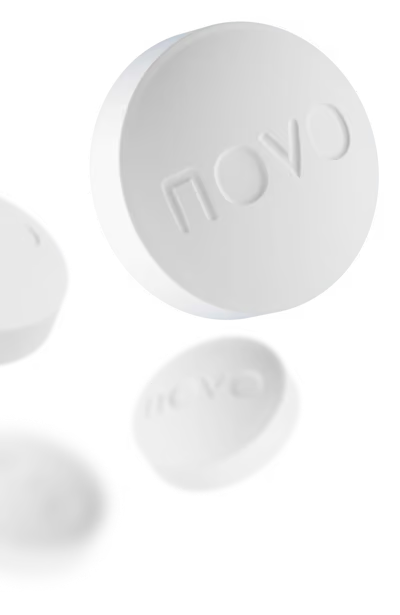
Yes. There are now two oral incretin mimetics licensed in the UK, both forms of oral semaglutide: Rybelsus®, for type 2 diabetes, and the higher-dose Wegovy pill (oral semaglutide 25 mg), which the MHRA approved on 11 June 2026 for weight management. Until recently GLP-1 receptor agonists were available only as subcutaneous injections, which some patients found inconvenient or distressing, so an oral route is a significant advance for both diabetes and obesity care.
Oral semaglutide was approved by the MHRA and the European Medicines Agency (EMA) following clinical trials (the PIONEER programme) demonstrating its efficacy and safety profile. It is formulated with an absorption enhancer called sodium N-(8-[2-hydroxybenzoyl] amino) caprylate (SNAC), which facilitates the absorption of the peptide molecule through the gastric mucosa. This innovative formulation overcomes the challenge that GLP-1 receptor agonists, being proteins, would normally be degraded in the digestive system before reaching the bloodstream.
Rybelsus® is available in three tablet strengths: 3 mg, 7 mg, and 14 mg. According to the Summary of Product Characteristics (SmPC), treatment should start with 3 mg once daily for 30 days to minimise gastrointestinal side effects. After 30 days, the dose should be increased to 7 mg once daily. If additional glycaemic control is needed after at least 30 days on 7 mg, the dose may be increased to 14 mg once daily.
Administration is critical for effectiveness: Rybelsus® must be taken on an empty stomach with up to 120 mL of water only. Tablets should be swallowed whole—do not split, crush, or chew them. Patients must wait at least 30 minutes before eating, drinking anything other than water, or taking other oral medications. If a dose is missed, skip it and take the next dose the following day at the usual time.
The Wegovy pill is a separate, higher-dose oral semaglutide licensed specifically for weight management in adults with obesity (or overweight with a weight-related condition). Its dose is stepped up from 1.5 mg to a 25 mg once-daily maintenance dose and, like Rybelsus, it must be taken on an empty stomach with a little water, waiting at least 30 minutes before eating. It is rolling out via private prescription from the second half of 2026 and is not yet on the NHS.
Rybelsus® (3 to 14 mg) is licensed for type 2 diabetes, while the higher-dose Wegovy pill (oral semaglutide 25 mg) is licensed for weight management; other GLP-1 receptor agonists remain available as injectable formulations, including exenatide, liraglutide, dulaglutide, and injectable semaglutide. NICE guidance supports the use of oral semaglutide as monotherapy when metformin is contraindicated or not tolerated, and as part of dual or triple therapy regimens for type 2 diabetes when clinically appropriate.
How Oral Semaglutide Compares to Injectable Incretin Mimetics
Oral semaglutide offers effective glycaemic control and weight loss, though direct head-to-head comparisons with injectable GLP-1 receptor agonists are limited. Clinical trials (PIONEER programme for oral semaglutide; SUSTAIN programme for injectable semaglutide) have demonstrated that oral semaglutide effectively reduces HbA1c levels (a measure of long-term blood glucose control) and promotes weight loss. Indirect comparisons and network meta-analyses suggest that once-weekly injectable semaglutide often produces greater reductions in HbA1c and body weight than oral semaglutide 14 mg, though oral semaglutide remains a highly effective option.
One key practical difference lies in administration requirements. Oral semaglutide must be taken on an empty stomach with up to 120 mL of water only, and patients must wait at least 30 minutes before eating, drinking, or taking other medications. Tablets must be swallowed whole and cannot be split, crushed, or chewed. In contrast, injectable formulations are administered subcutaneously, typically once weekly (for semaglutide, dulaglutide) or once daily (for liraglutide), without dietary restrictions or timing constraints.
From a patient preference perspective, some individuals strongly prefer oral medications due to needle phobia, injection site reactions, or lifestyle considerations. However, others may find the strict dosing requirements of oral semaglutide inconvenient, particularly if they have irregular morning routines.
In terms of side effects, both oral and injectable GLP-1 receptor agonists share a broadly similar adverse effect profile, predominantly gastrointestinal symptoms such as nausea, vomiting, and diarrhoea. These tend to be dose-dependent and often improve with continued use. Individual tolerance varies, but there is no evidence that oral formulations cause substantially different side effects compared to injectables.
Cost considerations and local formulary restrictions may also influence prescribing decisions. Healthcare professionals should discuss the benefits and limitations of each formulation with patients to support shared decision-making aligned with individual circumstances and treatment goals.
Who Can Take Oral Incretin Mimetics?
Oral semaglutide is licensed for adults with type 2 diabetes mellitus as an adjunct to diet and exercise. According to NICE guidance (NG28), it may be considered when:
-
Metformin is contraindicated or not tolerated, in which case oral semaglutide may be used as monotherapy
-
Metformin monotherapy has not achieved adequate glycaemic control, and dual therapy is required in combination with metformin or other oral antidiabetic agents
-
Triple therapy is needed, often alongside metformin and another agent such as an SGLT2 inhibitor
-
Weight management is a clinical priority, as GLP-1 receptor agonists promote weight loss
Oral semaglutide is not indicated for:
- Type 1 diabetes or for the treatment of diabetic ketoacidosis
The UK Summary of Product Characteristics lists hypersensitivity to semaglutide or any excipients as the formal contraindication.
Oral semaglutide is not recommended in patients with:
- Severe gastrointestinal disease, including gastroparesis or inflammatory bowel disease, as delayed gastric emptying may exacerbate symptoms (limited experience in these populations)
Important warnings and precautions include:
-
Personal or family history of medullary thyroid carcinoma (MTC) or multiple endocrine neoplasia syndrome type 2 (MEN 2): Animal studies showed thyroid C-cell tumours with GLP-1 receptor agonists, though the relevance to humans is uncertain. The UK SmPC advises caution and patient counselling, though this is not a formal contraindication in the UK.
-
History of pancreatitis: Patients should be monitored carefully. If acute pancreatitis is suspected, semaglutide should be discontinued and not restarted unless an alternative cause is confirmed.
-
Renal impairment: No dose adjustment is routinely required, though caution is advised due to the risk of dehydration from gastrointestinal side effects potentially leading to acute kidney injury.
-
Hepatic impairment: No dose adjustment is generally required.
-
Gallbladder disease: GLP-1 receptor agonists are associated with an increased risk of cholelithiasis (gallstones) and cholecystitis (gallbladder inflammation).
GLP-1 receptor agonists should not be used concomitantly with DPP-4 inhibitors (such as sitagliptin or linagliptin), as there is no additional glycaemic benefit and the combination is not recommended per NICE and BNF guidance.
When oral semaglutide is used with sulfonylureas or insulin, consider reducing the dose of these agents to minimise the risk of hypoglycaemia.
Pregnancy and breastfeeding: Oral semaglutide is not recommended during pregnancy, and women of childbearing potential should use effective contraception. Patients should discontinue treatment at least two months before a planned pregnancy. Use during breastfeeding is not recommended.
Healthcare professionals should conduct a thorough assessment of medical history, current medications, and individual patient factors before initiating oral semaglutide, ensuring the treatment aligns with clinical guidelines and patient safety priorities.
Side Effects and Safety Considerations
The most common side effects of oral semaglutide are gastrointestinal in nature, affecting a significant proportion of patients, particularly during treatment initiation or dose escalation. These include:
-
Nausea (reported in up to 20% of patients)
-
Vomiting
-
Diarrhoea
-
Abdominal pain
-
Decreased appetite
-
Constipation
These symptoms are typically mild to moderate and tend to diminish over time as the body adjusts to the medication. The gradual dose titration schedule (3 mg for 30 days, then 7 mg for at least 30 days before considering 14 mg) helps minimise gastrointestinal discomfort. Patients should be advised to eat smaller, more frequent meals and avoid high-fat foods, which may exacerbate nausea.
Dehydration and acute kidney injury can occur secondary to gastrointestinal fluid losses (vomiting, diarrhoea). Patients should be advised to maintain adequate fluid intake and seek medical advice if they experience persistent vomiting or diarrhoea, particularly if they have underlying renal impairment.
Serious but rare adverse effects require prompt medical attention. Patients should contact their GP or seek urgent care if they experience:
-
Severe, persistent abdominal pain radiating to the back, which may indicate acute pancreatitis. If pancreatitis is suspected, stop semaglutide immediately and do not restart unless an alternative cause is confirmed.
-
Right upper quadrant abdominal pain, fever, or jaundice, which may indicate gallbladder disease (cholelithiasis or cholecystitis). GLP-1 receptor agonists are associated with an increased risk of gallbladder disorders.
-
Signs of possible thyroid tumours, such as a lump in the neck, hoarseness, difficulty swallowing, or shortness of breath. Animal studies showed thyroid C-cell tumours, though the relevance to humans is uncertain. Patients with a personal or family history of medullary thyroid carcinoma or MEN 2 should be counselled accordingly.
-
Symptoms of hypoglycaemia (when used with sulfonylureas or insulin), including tremor, sweating, confusion, or palpitations. Consider reducing the dose of sulfonylureas or insulin when starting or titrating semaglutide.
-
Severe allergic reactions, including rash, swelling, or difficulty breathing.
Oral semaglutide may cause worsening of diabetic retinopathy, particularly in patients with pre-existing retinopathy who experience rapid improvement in glycaemic control. Ophthalmological monitoring may be appropriate in at-risk individuals.
Drug interactions are important to consider. The delayed gastric emptying caused by semaglutide can affect the absorption of other oral medications. Specific considerations include:
-
Levothyroxine: Monitor thyroid function, as absorption may be affected.
-
Warfarin and other coumarins: Monitor INR closely when starting semaglutide, as changes in glycaemic control and gastric emptying may affect anticoagulation.
-
Combined oral contraceptives: Efficacy is not expected to be reduced, based on pharmacokinetic studies.
Patients are advised to report suspected adverse drug reactions via the MHRA Yellow Card Scheme at yellowcard.mhra.gov.uk or through the Yellow Card app.
Regular follow-up is essential to assess treatment efficacy, tolerability, and any emerging safety concerns. Patients should be empowered to report side effects and understand when to seek medical advice, ensuring safe and effective long-term diabetes management.
Frequently Asked Questions
Is there an oral version of incretin mimetics I can take instead of injections?
There are now two oral incretin mimetics in the UK, both oral semaglutide: Rybelsus® (3 to 14 mg) for type 2 diabetes, and the higher-dose Wegovy pill (25 mg) for weight management, approved in June 2026. Both must be taken on an empty stomach with a little water, waiting at least 30 minutes before eating, drinking anything else, or taking other medications.
How effective is oral semaglutide compared to the injectable form?
Oral semaglutide effectively reduces HbA1c levels and promotes weight loss, though indirect comparisons suggest once-weekly injectable semaglutide may produce slightly greater reductions. Both formulations share similar side effect profiles, predominantly gastrointestinal symptoms such as nausea and diarrhoea.
Can I take oral incretin mimetics if I'm already on metformin?
Yes, oral semaglutide can be used in combination with metformin when metformin alone does not achieve adequate blood glucose control. NICE guidance supports its use as part of dual or triple therapy regimens for type 2 diabetes management.
What's the difference between oral semaglutide and DPP-4 inhibitors like sitagliptin?
Oral semaglutide is an incretin mimetic that directly activates GLP-1 receptors, whilst DPP-4 inhibitors like sitagliptin are incretin enhancers that prevent the breakdown of natural incretins. They should not be used together, as there is no additional glycaemic benefit and the combination is not recommended.
How do I get a prescription for oral semaglutide in the UK?
Your GP or diabetes specialist can prescribe oral semaglutide if it is clinically appropriate for your type 2 diabetes management. They will assess your medical history, current medications, and treatment goals to determine whether oral semaglutide aligns with NICE guidance and your individual needs.
What should I do if I experience severe stomach pain whilst taking oral incretin mimetics?
Severe, persistent abdominal pain radiating to the back may indicate acute pancreatitis, a serious but rare side effect. Stop taking oral semaglutide immediately and contact your GP or seek urgent medical care for assessment.
The health-related content published on this site is based on credible scientific sources and is periodically reviewed to ensure accuracy and relevance. Although we aim to reflect the most current medical knowledge, the material is meant for general education and awareness only.
The information on this site is not a substitute for professional medical advice. For any health concerns, please speak with a qualified medical professional. By using this information, you acknowledge responsibility for any decisions made and understand we are not liable for any consequences that may result.
Any third-party brands or services referenced on this site are included for informational purposes only; we are entirely independent and have no affiliation, partnership, or collaboration with any companies mentioned.