

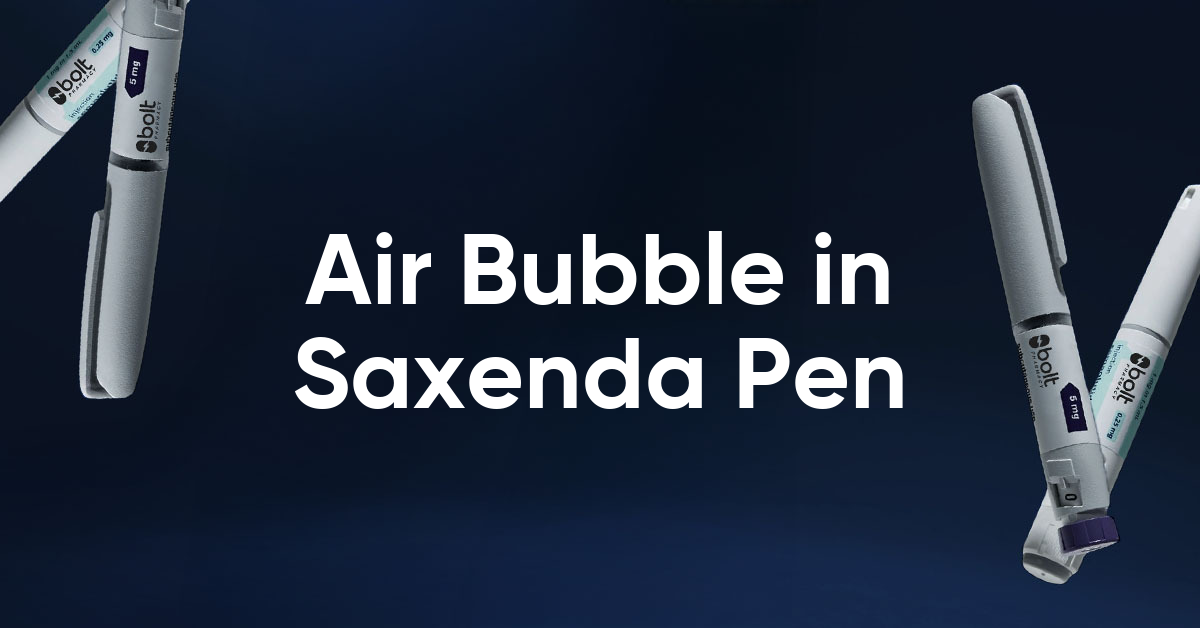
Air Bubbles in Saxenda Pens: Causes, Removal and Dosing Impact

Air bubbles in Saxenda pens are a common concern for patients using this GLP-1 receptor agonist for weight management. Saxenda (liraglutide) is administered via a pre-filled injection pen, and small air pockets may appear in the cartridge during normal use. Whilst these bubbles can be alarming, they are typically harmless and do not indicate a faulty device. Understanding how to identify, remove, and manage air bubbles is essential for ensuring accurate dosing and optimal treatment outcomes. This article provides practical guidance on air bubble management, proper injection technique, and when to seek advice from your healthcare provider.
Summary: Small air bubbles in Saxenda pens are normal and typically do not significantly affect your liraglutide dose when proper injection technique is followed.
- Saxenda (liraglutide) is a GLP-1 receptor agonist administered via pre-filled injection pen for weight management in adults with qualifying BMI criteria.
- Air bubbles form due to temperature changes, needle handling, or manufacturing processes and are generally harmless if the solution remains clear and colourless.
- A flow check should be performed before first use of each new pen by tapping the cartridge, holding needle upwards, and expelling air until medication appears at the needle tip.
- Large air bubbles or air in the needle can potentially cause underdosing, which is why proper flow check technique is essential before using a new pen.
- NHS funding for Saxenda is restricted under NICE TA664 and typically available through specialist weight management services; report suspected side effects via the MHRA Yellow Card scheme.
Attach new needle
When Required: Before every injection
Technique: Screw a fresh needle onto the pen; never reuse needles
Notes: Reusing needles increases infection risk and affects dosing accuracy
Point needle upwards
When Required: Flow check only (first use of new pen)
Technique: Hold pen with needle pointing towards ceiling
Notes: Allows air bubbles to rise naturally to the top of the cartridge
Tap the cartridge
When Required: Flow check only
Technique: Gently tap the cartridge holder several times with your finger
Notes: Dislodges small bubbles and encourages them to merge and rise
Perform flow check
When Required: First use of each new pen only
Technique: Select flow check setting per PIL; press dose button until counter returns to 0
Notes: A drop at the needle tip confirms correct function and air expulsion
Repeat flow check if needed
When Required: If no drop seen at needle tip
Technique: Change needle and retry; attempt up to six times
Notes: If still no drop after six attempts, do not use that pen
Remove needle after injection
When Required: After every injection
Technique: Remove needle, dispose safely, and recap the pen
Notes: Leaving needle attached allows air to enter cartridge between doses
Check solution appearance
When Required: Before every injection
Technique: Confirm solution is clear and colourless, free from particles
Notes: Do not use pen if cloudy, discoloured, or particulate matter is visible
Table of Contents
Understanding Air Bubbles in Saxenda Pens
Saxenda (liraglutide) is a glucagon-like peptide-1 (GLP-1) receptor agonist prescribed for weight management in adults with a body mass index (BMI) of 30 kg/m² or greater, or 27 kg/m² or greater with weight-related comorbidities. In the UK, Saxenda is also licensed for weight management in certain adolescents aged 12 to under 18 years who meet specific criteria, as set out in the UK Summary of Product Characteristics (SmPC). Administered via a pre-filled, multi-dose injection pen, Saxenda requires proper handling to ensure accurate dosing and optimal therapeutic outcomes.[2][4]
Air bubbles in Saxenda pens are a common occurrence and can understandably cause concern for patients who rely on precise daily dosing. These small pockets of air may appear in the cartridge window when you hold the pen up to the light, and whilst they can look alarming, they are generally a normal part of using injectable medications. The presence of small air bubbles does not necessarily indicate a fault with your pen, provided the solution remains clear, colourless and free from particles.
Understanding why air bubbles form and how to manage them properly is an essential part of your injection technique. Proper pen preparation helps ensure you receive the correct dose of liraglutide with each injection, which is important for achieving the gradual dose escalation recommended in the Saxenda Patient Information Leaflet (PIL).
This article provides guidance on identifying, removing, and understanding the impact of air bubbles in your Saxenda pen. NHS funding for Saxenda is subject to NICE Technology Appraisal 664 and is typically available only through specialist weight management services; access also depends on local Integrated Care Board (ICB) commissioning decisions, so availability may vary.[1] If you experience persistent difficulties with your injection pen or have concerns about your dosing accuracy, contact your GP, practice nurse, or the healthcare professional who prescribed your medication for personalised advice and a demonstration of correct injection technique.
If you experience any suspected side effects while using Saxenda, you can report them through the MHRA Yellow Card scheme at yellowcard.mhra.gov.uk.
Why Air Bubbles Form in Saxenda Pens
Air bubbles can form in Saxenda pens through several mechanisms, most of which are related to normal handling and storage of the device. Temperature fluctuations represent one of the most common causes. When your pen moves between different temperatures, for example, from refrigerated storage to room temperature, or when carried close to your body, the liquid medication expands and contracts slightly. This thermal change can cause dissolved air within the solution to come out and form visible bubbles.
According to the Saxenda Patient Information Leaflet (PIL), you should store unused pens in a refrigerator (2°C to 8°C) and never freeze them. After first use, the pen can be stored at room temperature (below 30°C) or in a refrigerator for up to 30 days. Allowing a refrigerated pen to reach room temperature before injecting may help reduce discomfort at the injection site.
Needle handling can also affect air in the cartridge. The PIL recommends removing the needle after each injection and attaching a new needle for the next dose. Leaving a needle attached between injections can allow air to enter the cartridge and may compromise sterility. Always recap the pen after removing the needle.
Rough handling of the pen can also cause air bubbles to form or become more visible. Handle your Saxenda pen gently; refer to the PIL and Instructions for Use for specific handling guidance. Rough handling during transport or storage may cause bubbles that were not previously visible to appear.
Additionally, the manufacturing and filling process may result in microscopic air bubbles being present in the cartridge from the outset. These are typically harmless and do not affect the medication's efficacy or safety. The solution in Saxenda pens should always be clear and colourless, if it appears cloudy, discoloured or contains particles, do not use the pen and seek a replacement from your pharmacist or prescriber.[2][4]
How to Remove Air Bubbles from Your Saxenda Pen
Removing air bubbles from your Saxenda pen is a straightforward process that should be performed according to the instructions in the Patient Information Leaflet (PIL) and Instructions for Use. Before using a new Saxenda pen for the first time, you should perform a flow check to ensure it is working properly. This flow check is not required before each daily injection, only before the first use of each new pen.
Step-by-step flow check for a new pen:
-
Attach a new needle to your pen, never reuse needles, as this increases infection risk and can affect dosing accuracy.
-
Hold the pen with the needle pointing upwards towards the ceiling. This allows air bubbles to rise naturally to the top of the cartridge.
-
Gently tap the cartridge with your finger several times. Use light, repeated taps on the side of the cartridge holder. This helps dislodge smaller bubbles and encourages them to merge and rise to the top near the needle.
-
Perform a flow check by turning the dose selector to the flow check symbol as specified in your PIL and Instructions for Use. Keep the pen with the needle pointing upwards.
-
Press the dose button fully until the dose counter returns to 0. You should see a drop of Saxenda appear at the needle tip. This confirms that the pen is working correctly and that air has been expelled from the needle.
-
Repeat if necessary. If you do not see a drop of medication at the needle tip, repeat the flow check. Refer to your PIL and Instructions for Use for the exact number of attempts recommended for your pen. If you still do not see a drop after following those instructions, change the needle and try again. If the pen still does not work, do not use it and contact your pharmacist or prescriber.
For your daily injections, you do not need to perform this flow check again. Simply attach a new needle, dial your prescribed dose, and inject as directed. After each injection, remove the needle and dispose of it safely in a prescribed sharps bin, do not place needles in household waste. Ask your GP, pharmacist, or local authority about sharps bin provision and collection arrangements in your area. Recap your pen after removing the needle to help prevent air from entering the cartridge between uses.
If you notice large air bubbles in the cartridge during routine use that concern you, consult your healthcare provider or pharmacist for advice. Remember that small bubbles are normal and generally do not affect your dose.
Do Air Bubbles Affect Your Saxenda Dose?
Small air bubbles in your Saxenda pen typically do not significantly affect your dose, and this is an important reassurance for patients who may worry about dosing accuracy. The Saxenda pen is designed as a precision device that delivers medication based on the movement of the plunger mechanism, and small bubbles, particularly those that remain in the cartridge rather than being injected, generally have minimal impact on the amount of liraglutide you receive. The Saxenda PIL and Instructions for Use describe the flow check procedure specifically to address air in the needle before first use of a new pen.
However, larger air bubbles or air in the needle can potentially affect dosing accuracy. If a substantial air pocket is present at the top of the cartridge and is not removed during the initial flow check of a new pen, you may inject some air instead of medication, resulting in an underdose. This is why the flow check procedure is essential before first using a new pen, as described in the Patient Information Leaflet.
The clinical implications of occasional minor dosing variations with Saxenda are generally limited. According to the Summary of Product Characteristics (SmPC), liraglutide has a half-life of approximately 13 hours, meaning it remains in your system and exerts its effects over an extended period.[2][3] The medication works by activating GLP-1 receptors, which slows gastric emptying, reduces appetite, and promotes satiety.[2][3] These effects build up gradually with consistent daily dosing, following the recommended escalation schedule from 0.6 mg up to the maintenance dose of 3.0 mg daily.
If you suspect you have consistently under-dosed due to air bubbles or injection technique issues, do not attempt to compensate by taking extra doses. Instead, continue with your regular dosing schedule and contact your prescriber or practice nurse for advice. They can review your injection technique, assess your treatment response, and determine whether any adjustment is needed. Similarly, if you experience reduced efficacy, such as increased appetite or weight regain, discuss this with your healthcare provider rather than assuming it is related to air bubbles. Multiple factors can influence Saxenda's effectiveness, including dietary adherence, physical activity levels, and individual metabolic responses.
Scientific References
- Liraglutide for managing overweight and obesity. Technology appraisal guidance [TA664].
- Saxenda 6 mg/mL solution for injection in pre-filled pen – Summary of Product Characteristics.
- Saxenda (liraglutide) – European Public Assessment Report.
- Package leaflet: Information for the patient – Saxenda 6 mg/ml solution for injection in pre-filled pen.
- Obesity – Treatment.
Frequently Asked Questions
Are air bubbles in my Saxenda pen dangerous?
Small air bubbles in Saxenda pens are normal and not dangerous. They typically do not affect your dose or the medication's safety, provided the solution remains clear and colourless without particles.
How often should I perform a flow check on my Saxenda pen?
You should perform a flow check only before the first use of each new Saxenda pen, not before every daily injection. This involves tapping the cartridge, holding the needle upwards, and expelling air until medication appears at the needle tip.
What should I do if I cannot remove air bubbles from my Saxenda pen?
If you cannot see a drop of medication at the needle tip after six flow check attempts with a new needle, do not use that pen. Contact your pharmacist or prescriber for a replacement and advice on proper injection technique.
The health-related content published on this site is based on credible scientific sources and is periodically reviewed to ensure accuracy and relevance. Although we aim to reflect the most current medical knowledge, the material is meant for general education and awareness only.
The information on this site is not a substitute for professional medical advice. For any health concerns, please speak with a qualified medical professional. By using this information, you acknowledge responsibility for any decisions made and understand we are not liable for any consequences that may result.
Any third-party brands or services referenced on this site are included for informational purposes only; we are entirely independent and have no affiliation, partnership, or collaboration with any companies mentioned.